36 Questions for Married Couples: After the Vows
Long marriages are full of conversation and short on disclosure. You talk about logistics, kids, in-laws, the dishwasher, the mortgage, the calendar, what's for dinner. You discuss your spouse with friends more than you talk to your spouse about themselves.
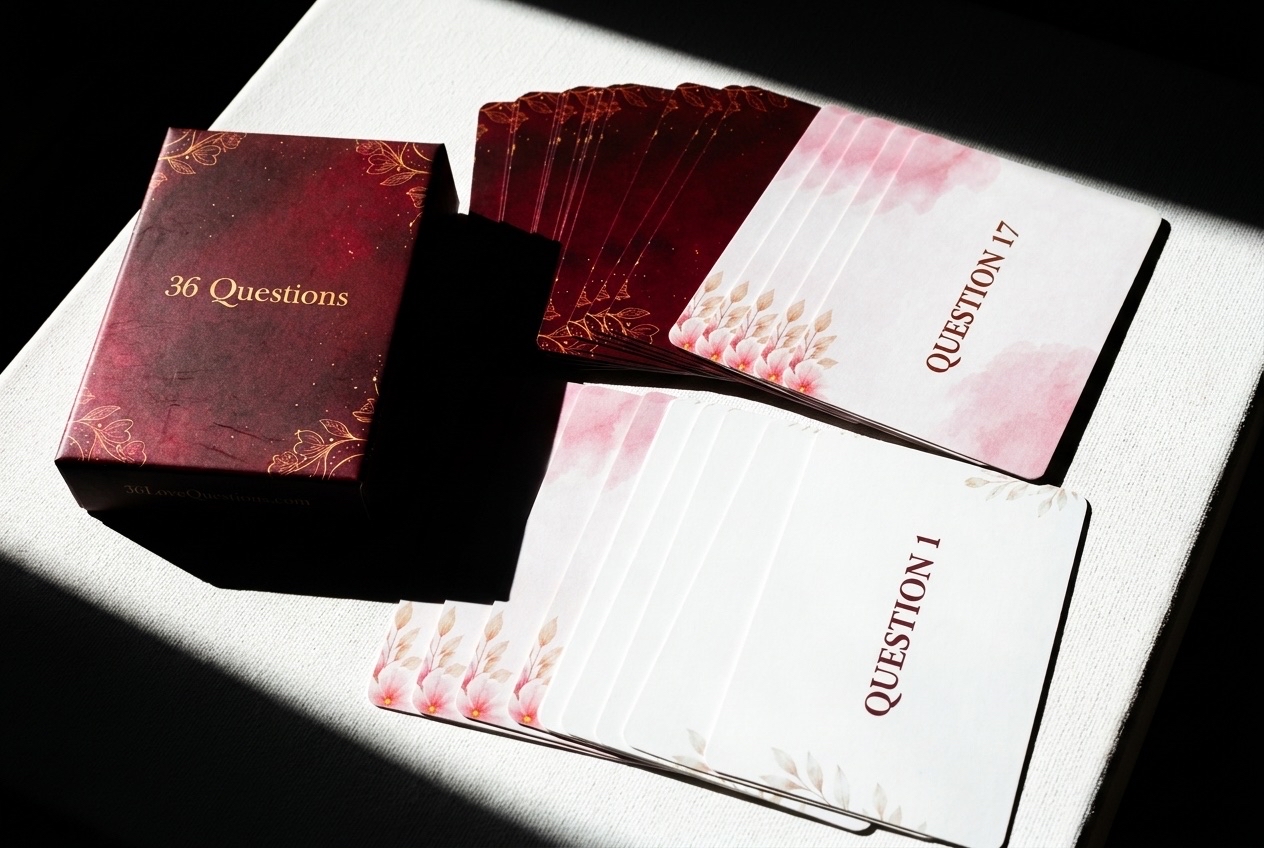
The 36 questions are useful in marriage exactly because they break the conversational pattern that years of marriage tend to settle into. Here's how married couples actually use them, and how to keep doing them year after year without it turning into a chore.
Why married couples need this more than dating couples
In the first year of dating, almost every conversation is implicitly about getting to know the other person. Then something quiet happens: you finish "getting to know" each other, file the project as Done, and move into the long phase of running a shared life.
The trouble is, the person across the table is still updating. The version of your spouse you met at 26 is not the version sitting opposite you at 41. They have new fears, new memories, new dreams that haven't been spoken because there hasn't been a structured moment to speak them. And nobody is in the habit of asking.
The 36 questions are a structured moment. They're a way to say: let's spend ninety minutes treating you as someone I'm still curious about. That, more than anything, is the thing married couples tell us they wanted and didn't realize they were missing.
What's different from dating
A few things change when you do the 36 questions with someone you've been married to:
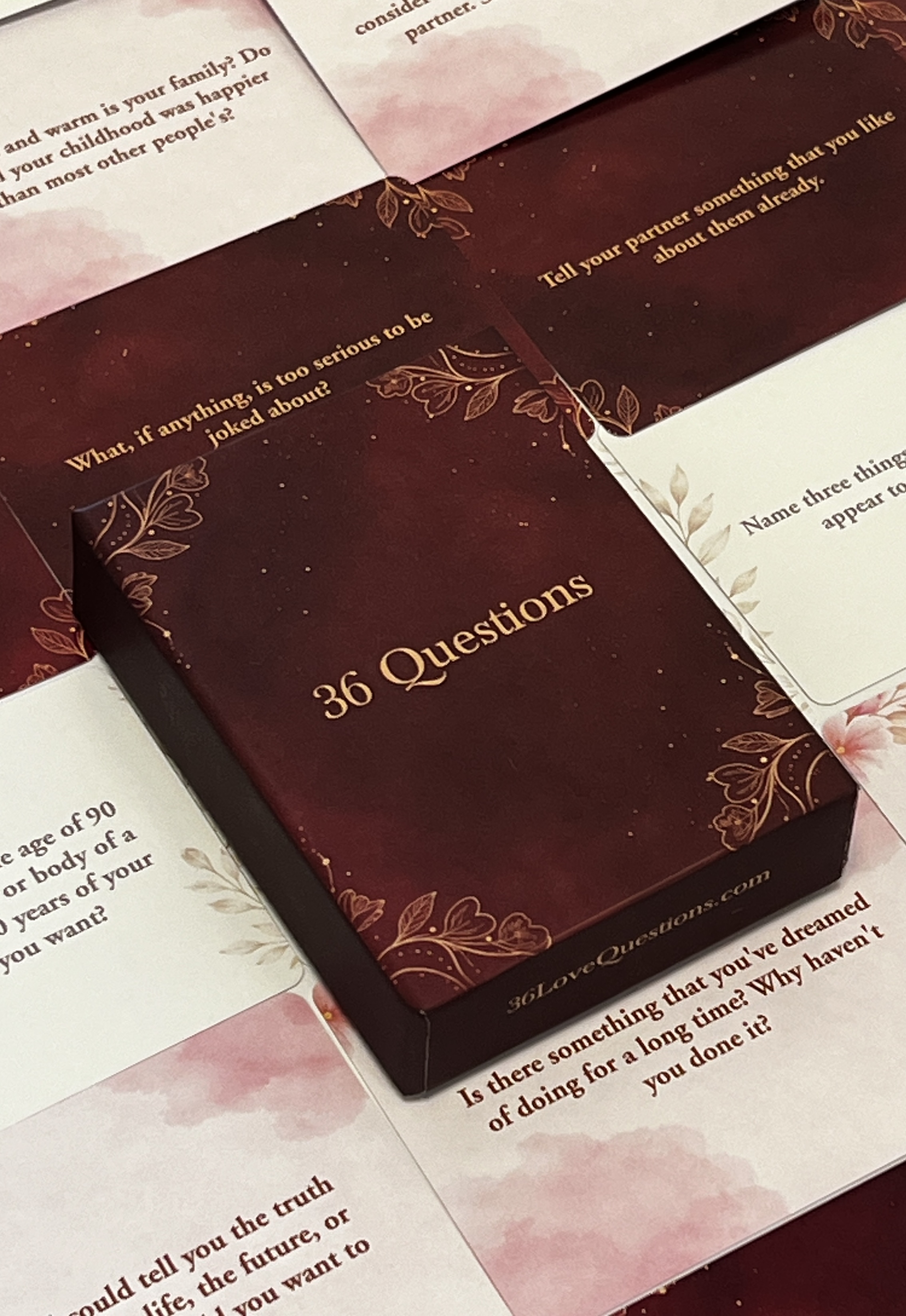
- The "warm-up" cards stop being warm-ups. Card 1 (dinner guest) is no longer light: your spouse's dinner guest fantasy in 2026 is probably not the one they had in 2008. Card 4 ("perfect day") often surprises.
- Set III lands harder, not softer. Cards 28 ("what you like about your partner"), 33 ("what would you regret not telling"), and 36 (asking advice on a personal problem) consistently get the strongest emotional response from married couples.
- The eye contact is different. Strangers find it awkward. Married couples find it moving. The four minutes often produce tears.
- You'll be tempted to debrief mid-deck. Don't. Treat it like a session: push through, then talk afterwards.
A protocol for the first time
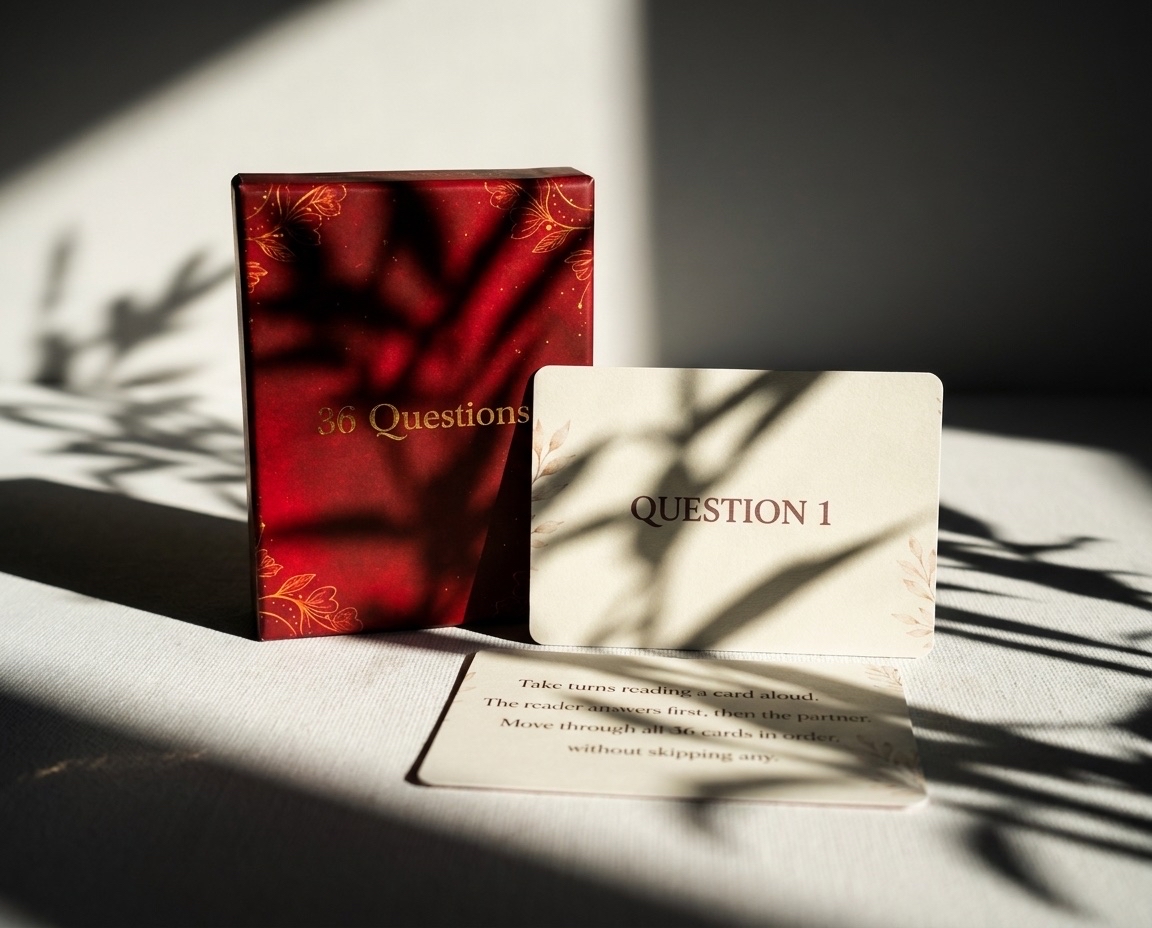
If you've never done the deck together as a married couple, do it like this:
- Pick a night without alcohol-as-the-event. A glass of wine each is fine. Three is too many. The deck rewards being present.
- Tell each other in advance you're doing it. Don't surprise your spouse with the deck after dinner. Mutual buy-in matters.
- Pick a room you don't usually have hard conversations in. If your kitchen table is where the bills live, do this in the living room. New room, new mode.
- Block 2 hours. Plan for 90 of cards + 30 of debrief.
- Phones in another room. Yes, even the kid monitor, keep it on but in another room with the volume up.
- Do all 36 cards. Don't skip the heavy ones. Married couples have the trust to handle them; that's what marriage is for.
- Do the eye contact. Married couples are the ones who most reliably want to skip it. Don't.
- Open debrief afterwards. Not "rate the questions." Just talk about what came up.
A protocol for repeating it yearly
The most useful pattern we've seen is married couples who do the deck once a year, on or near their anniversary. The closeness effect is real on every repeat: your answers genuinely change.
A few notes for the recurring version:
- Do it the night before the anniversary, not on the day. The anniversary day usually has plans. The night before tends to be quiet and you'll be in the right state.
- Don't compare to last year's answers. Resist the urge to remember what you said last time. Answer fresh.
- Notice the cards that move differently year to year. Cards 14, 17, 21, 27 are usually the ones that change most over a marriage.
- Skip is okay if there's been a recent crisis. If a parent died this year, skip Card 35. If a job loss happened this year, modify Card 14. Marriage is about reading each other.
- Add one extra question of your own at the end. Many couples we've heard from add a 37th question: something specific to their life that year. What's the thing you're not sure I noticed about you this year? is a good one.
When the deck reveals something hard
Sometimes a card surfaces something that's been quietly off in the marriage. A pause that's a little too long. An answer that doesn't match the spouse's mental model. A "we" statement in Card 25 that doesn't feel true.
This is not a problem with the deck. It's information. A few things to know:
- The deck is not a substitute for therapy. If something hard surfaces, the right move is usually not to "process it now": it's to name that you noticed and come back to it within a week.
- The eye contact will amplify whatever the deck surfaced. That's its job. Don't skip the eye contact because something hard came up; do it because something hard came up.
- The debrief afterwards is for the small stuff, not the big stuff. If something marriage-shaking came out of the deck, the debrief is for "I noticed you paused on 18, want to talk about that this weekend?" not for full processing in the moment.
What married couples consistently report
Across hundreds of stories from married couples who've done the deck:
- A short-term boost in affection and attention. The week after, almost everyone reports being more physically affectionate.
- A new ongoing conversation thread. Some answer from the deck becomes a recurring topic for weeks.
- An update to the mental model of their spouse. Sometimes small, sometimes large.
- A renewed sense that their spouse is interesting. This is the one most marriages need most.
The last one is the deeper case for the deck in marriage. It's not that you've stopped loving your spouse: it's that the curiosity has gotten covered up by the logistics. The 36 questions, done once a year, peel that off.
A note on giving the deck as an anniversary gift
This is probably the most common use case for the physical version of our deck: bought as an anniversary present, often by one spouse, surprising the other. It works well because it's both a gift and a plan: "This is for tonight."
If you're shopping for a couple you know (your parents, your in-laws, friends approaching a milestone year), this is also a thoughtful, slightly braver-than-average gift. We cover that case in the anniversary gifts post.
A short FAQ from married couples
Questions we get from married couples specifically, with the short answers:
- "Can we do it on the wedding anniversary itself?" Yes, but most couples report better results doing it the night before. The day-of usually has plans, family obligations, dinner reservations, or photos. The night before is quiet and you'll be in the right state.
- "What if one of us is much more enthusiastic than the other?" Common. The reluctant partner is usually worried it'll be a "talk" in disguise. Frame it explicitly as a curiosity exercise ("let's see if we still know each other") and propose a one-time try. The reluctant partner almost always becomes the one who asks for a repeat the next year.
- "What if a card surfaces something genuinely hard about the marriage?" It will, sometimes. Don't process it that night. Name that you noticed and schedule a separate conversation within the week. The deck's job is to surface; processing is a different evening's job.
- "Can we do this with another married couple?" No. The protocol requires a one-on-one container. Doing it as a foursome turns it into a parlor game and the closeness curve doesn't fire.
- "How long should we wait between repeats?" A year is the most-reported sweet spot. Some couples do it twice a year: once on their anniversary, once during a winter slump. More often than that and the answers stop changing enough.
The marriage that keeps being curious is the one that lasts. The 36 questions don't create the curiosity; they re-open the door to it once a year.