Habits of Happily Married Couples (and How to Steal Them)
Most "habits of happy couples" articles are vibes. They tell you happy couples "communicate" and "respect each other" and "make time for each other." Cool. Now what.
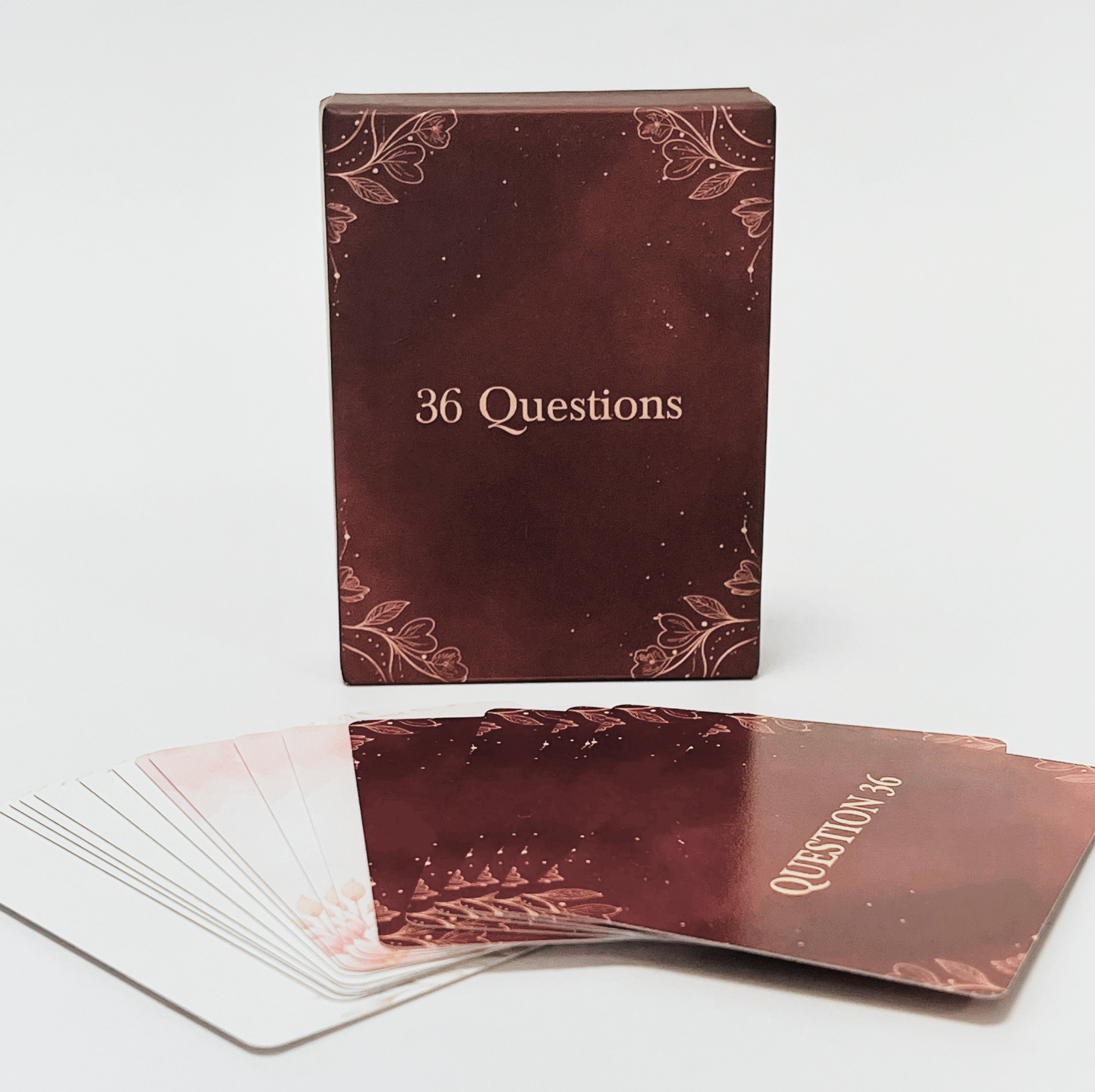
This list is built differently. Each habit below comes from one of three sources: longitudinal research on long-married couples (chiefly the Gottman lab and Aron's group at Stony Brook), specific therapist-developed practices that are well documented, or patterns we've seen consistently across the couples we've heard from over years of making a card game about this stuff.
Each one is also small enough to install in a normal life. None of them require a personality transplant.
1. They turn toward small bids
This is the single most-replicated finding in long-term couples research. A "bid" is any small attempt to engage your partner: pointing something out, telling a small story, sharing a small observation. The partner can turn toward (acknowledge, engage), turn away (ignore), or turn against (snap).
In Gottman's six-year longitudinal data, couples who turned toward each other's bids ~86% of the time stayed married. Those who turned toward ~33% of the time were divorced.
How to steal it: notice your partner's small bids (they happen many times a day) and respond more of them. Not all of them. Just more.
2. They have one ritual that protects shared time from work
Almost every happily married couple we've heard from has at least one specific ritual that explicitly walls off time from work and screens. Saturday morning coffee. Phones in another room at dinner. A walk after dinner three nights a week. Sunday morning in bed reading until 10am.
The specific ritual doesn't matter. The fact that it's named, repeated, and protected matters.
How to steal it: pick one specific small window (20 minutes a day, or 90 minutes a week) and protect it absolutely. After three months it becomes load-bearing.
3. They keep being curious about each other

The research-language for this is "self-expansion theory" (Aron's broader work after the 36 questions). The colloquial version: couples who keep being interested in who their partner is now, not who they were when they met, stay close.
The trap is assuming you already know your partner. You don't. They've been updating without telling you for a decade.
How to steal it: ask one question per week that you've never asked your partner before. We have a long list in our conversation starters post. Or do the 36 questions once a year as a structured update.
4. They repair fast
The second-biggest Gottman finding: how quickly couples repair after small ruptures matters more than how often they fight.
A repair is any small softening: a "wait, that came out wrong," a hand on a shoulder, a small joke that punctures the tension. Couples who repair within minutes are durable. Couples who let small ruptures stew into days of coldness erode.
How to steal it: catch yourself in the small frictions, and make the repair within five minutes. The repair can be awkward; that doesn't matter.
5. They share at least one ongoing project
Long-married couples consistently have at least one shared project that is neither logistical (kids, mortgage) nor purely recreational (TV). A garden. Renovating the house. A shared interest in something. A foster dog. Cooking through a cookbook.
The project gives the relationship something to point at besides itself. It's a third thing that both of you tend.
How to steal it: pick one. It can be small. The point isn't the project; it's the shared tending.
6. They keep separate friendships and interests
Slightly counterintuitive but well-documented: couples in the highest-functioning long marriages tend to have more separate interests, friendships, and time apart than mid-tier couples, not less.
The mechanism is roughly that separate interests refresh you, give you something to bring back into the relationship, and prevent the merger of identities that erodes attraction over time.
How to steal it: keep one or two close friendships that are yours, not a couple-friend's-spouse. Have one solo hobby. Spend a long weekend somewhere alone once a year if you can.
7. They tell each other things they like about each other
Research from the Gottman lab calls this the "magic ratio": happy long-term couples have ~5 positive interactions for every 1 negative one in their day-to-day. Most of the positive interactions aren't grand. They're small expressions of appreciation: "you handled that really well," "I love when you laugh like that."
How to steal it: at the end of dinner once a week, each of you say one specific thing the other did this week that you appreciated. Not generic. Specific.
8. They argue without getting cruel
Happily married couples do fight. The difference is that they don't deploy what Gottman calls the "Four Horsemen": criticism, contempt, defensiveness, and stonewalling. Especially contempt (eye-rolling, mockery, sarcasm aimed at the partner), which is the single strongest predictor of divorce in his data.
How to steal it: when you fight, fight about the thing, not about your partner's character. Avoid contempt as if it were physical violence. It's the marriage-killer.
9. They keep doing new things together
Aron's group has published several studies on what they call "self-expansion" in long-term couples: couples who do novel and challenging activities together (not just pleasant ones) report higher satisfaction over time.
The mechanism is roughly that novelty creates shared state: your partner gets re-encoded as "the person I am navigating this new thing with."
How to steal it: once a month, do something neither of you has done. It can be small (a restaurant in a neighborhood you've never visited, a hike you haven't done, a class). The novelty itself is the active ingredient.
10. They periodically have a structured deep conversation
Long-married couples in our experience tend to have at least one anchor practice (a session, an annual ritual, a yearly retreat) that is structurally different from the daily cadence and that produces a bigger update on each other than the dailies do.
The 36 questions protocol is one version of this. So is a yearly weekend away with one long conversation about how the year went and what you each want from the next one. So is, for some couples, working with a couples therapist proactively rather than reactively.
How to steal it: do the 36 questions once a year. Or pick a different annual anchor that creates a long, structured, deeper-than-usual conversation. The form matters more than the specific tool.
What's not on this list
A few things that "habits of happy couples" lists usually feature that aren't well supported by the research:
- "Date night every week." Useful, but the evidence is much weaker than for "any protected time" or "novel shared activity."
- "Say I love you every day." Pleasant; not predictive in any longitudinal study we know of.
- "Always go to bed angry, never go to bed angry." The research is mixed and roughly cancels out. Both approaches work for different couples.
- "Never criticize your partner." Wrong. Specific complaints about behavior are fine. Contempt is what's lethal.
How to actually install these
Don't try ten habits at once. Pick the one that addresses your weakest area and start there.
If your weak area is...
- Conversation has gone flat: start with the curiosity habit (#3) and the conversation-starter practice. Add the 36 questions as an annual anchor.
- You're irritable with each other a lot: start with the repair habit (#4) and the bids habit (#1).
- You feel like roommates: start with the protected time ritual (#2) and the novelty habit (#9).
- The arguments have gotten ugly: start with the no-contempt habit (#8). Possibly with help from a therapist.
- You feel disconnected from each other's interior: start with the structured deep conversation (#10). The 36 questions are the lowest-friction way in.
The marriages that last are not built by big gestures. They're built by small, repeatable habits that compound across decades. Pick one. Start this week.