Conversation Starters for Couples Who've Run Out of Things to Say
Almost every long-term couple has a moment of realizing they've turned their conversations into a logistics meeting. How was your day. Did you call the plumber. What's for dinner. We need to deal with the school form. Important. Not connecting.
Most "conversation starters for couples" lists you'll find online are recycled icebreakers from team-building workshops. The ones below aren't. They're prompts that have actually produced real conversations in long-term relationships, organized by depth.
How to use these
Three rules that change the hit rate dramatically:
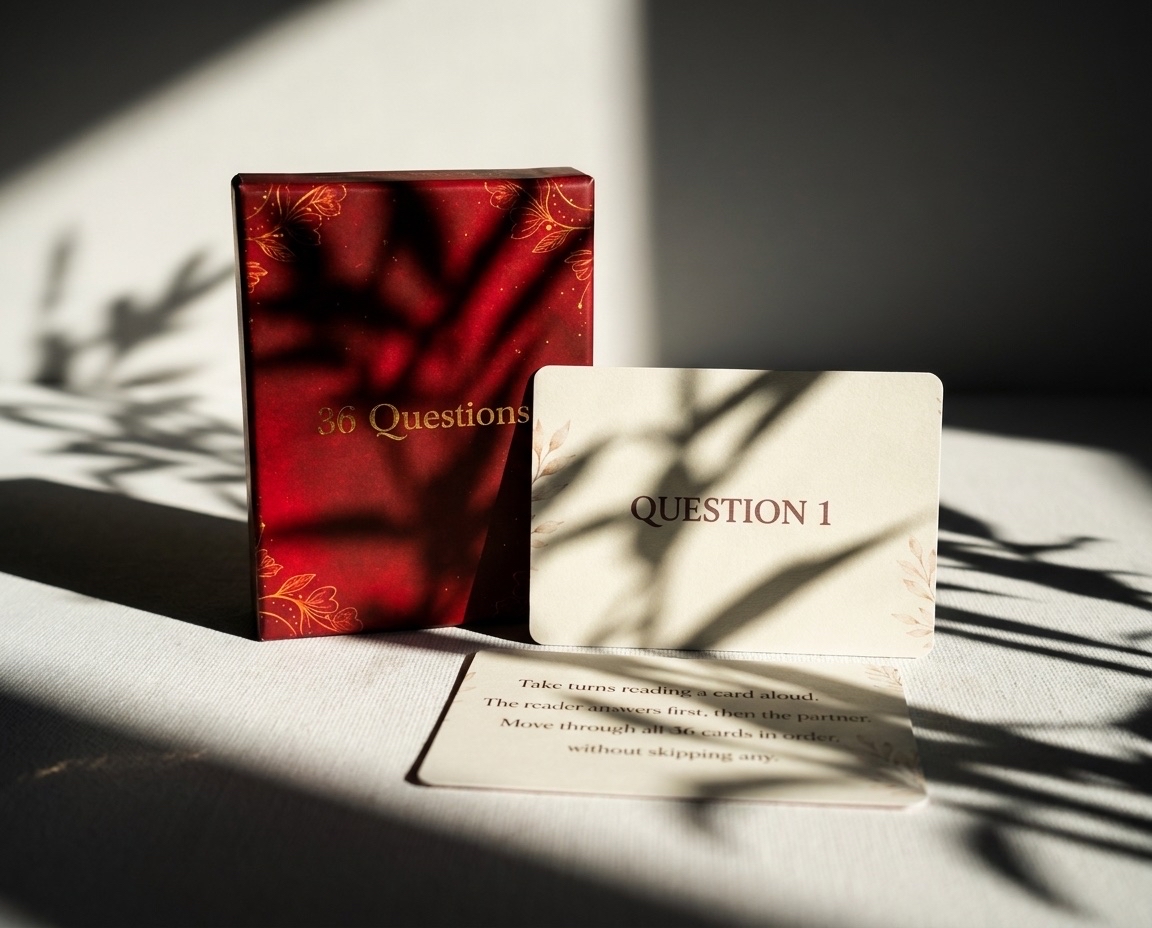
- Ask one. Then both answer. Both partners answer the same question. This is the structure that the 36 questions are built on, and it produces dramatically better results than alternating different questions.
- No follow-up questions. When your partner is answering, just listen. Then you take your turn.
- Match depth. If they answered light, answer light. If they answered deep, answer deep. The conversation breaks when one partner sandbags the other with disclosure.
If you've never tried this format, start with one question per dinner for a week. You'll feel the difference fast.
Light: questions for opening up the lane
These are good first questions if conversation has been logistical-only for a while. None of them require vulnerability; all of them ask for something more interesting than "how was your day."
- What's the best thing that happened in your week that I don't know about yet?
- What's something small you noticed today that no one else would have?
- What's a song you've been listening to lately?
- What's the last thing that made you laugh out loud when you were alone?
- What's a small thing you bought for yourself this month that you don't regret?
- What's a piece of news this week you actually had a feeling about?
- What's something you wanted to say earlier this week but the moment passed?
- What's one thing you'd want to spend a Saturday doing if no one would judge you?
Use a few of these per week. They sound small; they aren't.
Medium: questions about the past and the self

These get at the interior: the stuff that doesn't come up in the natural rhythm of married life because nobody asks.
- What's a piece of advice you got at twenty that you've quietly chosen to ignore?
- Who's a friend of yours from earlier in your life that you wish I knew better?
- What's a memory of yours that you don't tell people about much, even though you like it?
- What's something you're better at now than you were five years ago?
- What's a part of yourself you've been a little harsh with lately?
- What's something you used to be sure about that you're less sure about now?
- What's a place you've been to once that you'd want to go back to?
- Who's someone (alive or dead) you wish you could spend an afternoon with?
These are conversation starters in the literal sense: they start a conversation that often runs much longer than the question.
Deeper: questions about the relationship itself
Use sparingly. Don't put more than one of these in a single dinner. They're the kinds of questions that benefit from the reciprocal structure most of all.
- What's something I do that you've never told me you appreciate?
- What's a small change in our routine that would make a real difference for you?
- When have you felt most seen by me in the past year?
- What's a kind of conversation you wish we had more often?
- What's something you used to want from this relationship that you don't anymore?
- What's something you want from this relationship that I might not know about?
- When have you felt closest to me recently, and what was happening?
- What's something I've changed about myself that you've noticed and liked?
Ask one of these once a month, not once a week. They land harder if they're rare.
Curiosity-restoring: questions about the world
A different category, not about each other directly, but about the world and what each of you thinks about it. These are surprisingly effective at restoring the intellectual attraction in long-term relationships.
- What's something you've changed your mind about this year?
- What's a small belief of yours that almost everyone you know would disagree with?
- What's a movie/book/show you've recommended to someone in the past year that they should actually watch?
- What's a topic you'd want to learn more about if you had unlimited time?
- What's a profession you'd be doing in an alternate life?
- What's a place in the world you're a little obsessed with even though you've never been?
- What's a problem in the world that you wish more people cared about?
The intellectual curiosity that drew you together early is usually still there in long-term couples. It just doesn't get expressed because the conversational habit doesn't ask for it.
A small practice that works: two questions per dinner
The most reliable habit we've heard back from couples: at dinner, instead of (or alongside) the usual catch-up, ask one question from this list, but it has to be a question you've never asked your partner before.
You ask, both answer. Maybe one more question, both answer. Then back to the rest of dinner.
That's it. Two questions per dinner, three or four times a week. Within a month, the conversation lane has changed. Couples who do this report:
- A noticeable affection bump after the first week.
- A new shared sense of being curious about each other again.
- More spontaneous deeper conversations on long drives, in bed, on walks.
The questions are scaffolding. After a while, the lane stays open without them.
When you need a bigger reset: the full 36
If "we don't talk anymore" has been your relationship's truth for a while, two questions per dinner is the right ongoing fix, but the reset is the full 36 questions in one sitting.
We've written about the 36 questions for long-term couples specifically and for the general protocol. The short version: 90 minutes, all 36 cards in order, four minutes of eye contact at the end.
Couples who do this consistently report that the next month of their normal conversations is dramatically warmer, even when none of those conversations explicitly reference the 36 questions night.
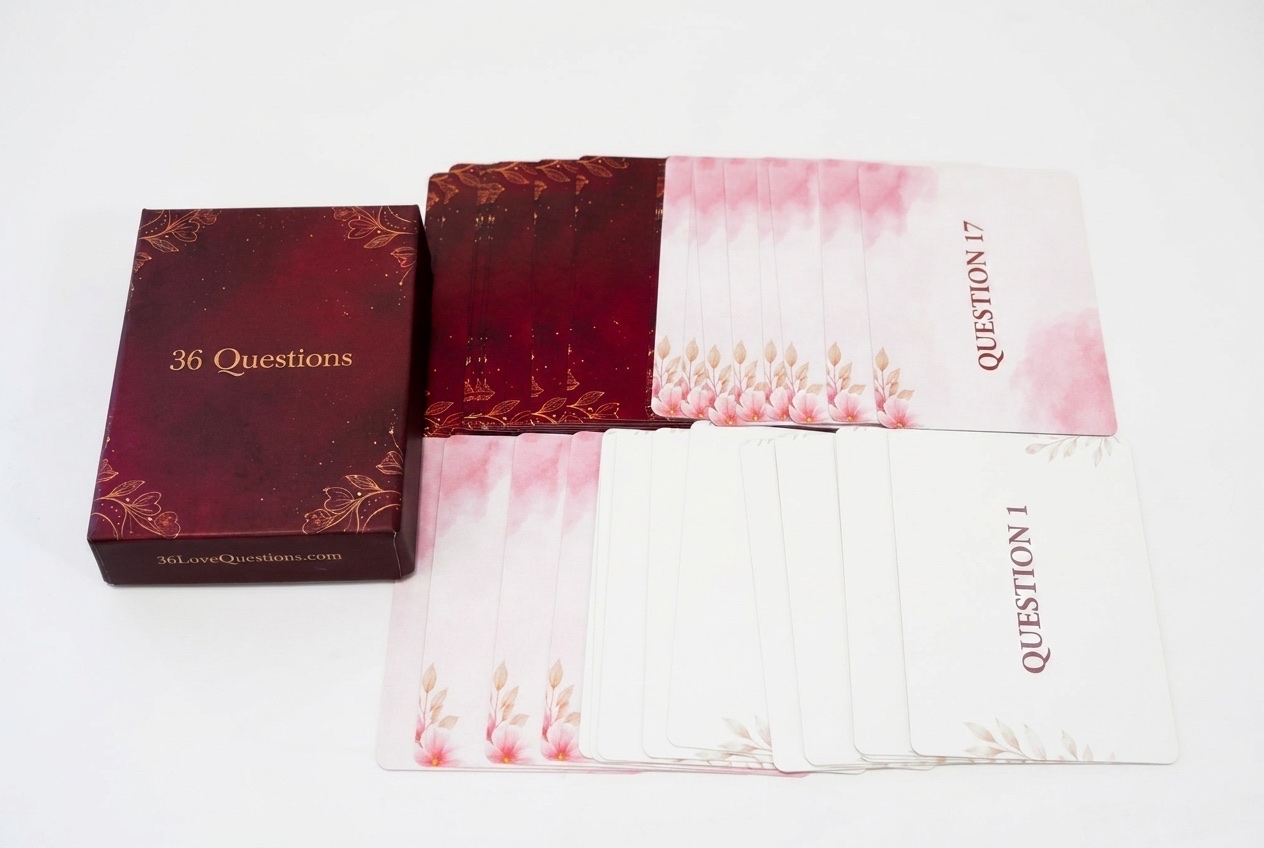
We make a card-deck version that's specifically designed to live in a kitchen drawer until you need it. Many couples we hear from use it twice a year: once around an anniversary, once when they notice the conversation has gone logistical-only for too long.
A small protocol for re-opening a quiet relationship
If conversation has gone fully logistical-only for months (not weeks), the two-questions-per-dinner habit is a slow fix. A faster one, in three steps, that we've watched work:
- Week one: name it, lightly. Once, over a quiet meal, say something like "I think we've gone fully logistics-only for a while. Want to try something to change that?" Don't accuse. Don't propose a Big Talk. Just open the door. The naming alone reduces the awkwardness of the next steps.
- Week two: install the two-questions-per-dinner rhythm. Pick three nights. One question each. Both answer. No follow-up agenda. Use the lists above and start with the light category: going straight to the deeper questions after months of silence is too much escalation, too fast.
- Week three or four: do the full 36 questions in one sitting. By now the lane is open enough that the deck won't feel like an ambush. Do the protocol properly: 90 minutes, no phones, eye contact at the end.
This three-week version turns "we don't talk anymore" into a real shift more reliably than any single grand-gesture conversation. The pattern is small re-openings first, big structured one second. Reverse the order and the big one tends to feel like a confrontation.
The reason couples run out of things to say to each other is not that they've used up the topics. It's that they've stopped asking. Asking is the entire skill. The questions on this page are just one way to practice it.