Vulnerability in Relationships: Why It Matters and How to Practice It
"Be more vulnerable" is one of those pieces of relationship advice that sounds correct and is almost impossible to act on. Most people who have been told to be more vulnerable already know they should be, and don't know what exactly to do.
This is the practical version. What vulnerability actually means in a relationship, why it's the active ingredient in closeness, what oversharing looks like (because that's the obvious failure mode), and how to install vulnerability as a habit rather than a personality trait.
What vulnerability actually is
A useful working definition, distilled from the research literature:
Vulnerability is voluntarily revealing something about yourself that the listener could use to think less of you, and trusting that they won't.
That's the whole thing. Two parts: something the listener could use against you, and trust that they won't.
This definition is more useful than the soft-focus version ("being open with your feelings") because it tells you what counts and what doesn't. Saying "I'm anxious about this trip" to your partner is mildly vulnerable. Saying "I'm anxious about this trip and I think it's because I'm worried I'll embarrass you" is significantly more vulnerable. The difference is that the second one gives your partner something they could use to dismiss you, and you're trusting they won't.
The closeness effect of vulnerability comes precisely from that handover. Your partner gets handed a small piece of leverage and chooses, repeatedly, not to use it. That's what produces the felt sense of being known and accepted.
Why it matters
The research case for vulnerability is unusually strong. Three threads:
Aron's 36 questions study is essentially a structured vulnerability protocol. The closeness effect comes from escalating reciprocal disclosure: both partners progressively handing each other small pieces of leverage, repeatedly, in a setting where trust holds.
Brené Brown's research on shame and connection found that "wholehearted" people (those who reported the highest belonging and self-worth) all shared one practice: they were willing to be vulnerable when it wasn't comfortable.
Gottman's longitudinal data shows that the highest-functioning long-term couples have a ratio of "turning toward" vs "turning away" of about 5:1. Most of the "turning toward" moments are responses to small bids of vulnerability: here is a small piece of me, what do you do with it?
The convergent finding across all three is the same: closeness is built by small, repeated acts of voluntarily exposed self.
What it isn't
Vulnerability is not the same as oversharing, processing, or trauma-dumping. The distinction matters because the failure mode is real.
- Oversharing is revealing intimate material to someone who hasn't earned the trust required to receive it. It often produces less closeness, not more, because the listener feels imposed upon.
- Processing is using your partner as your therapist for an issue that you haven't done your own work on. Different exercise.
- Trauma-dumping is offloading heavy material on someone unprepared, often as a flight from your own discomfort. Not vulnerability. Extraction.
The line is usually about whether the disclosure is in service of connection or in service of relief. Vulnerability serves connection. The others serve relief.
A simple test: would you make this disclosure if your partner couldn't respond? If yes, you're processing or dumping, not being vulnerable. Vulnerability is for the relationship; processing is for you.
What it looks like in practice
A few specific examples of vulnerability in a long-term relationship, scaled from small to large:
Small:
- "I felt left out when you laughed with your sister at dinner."
- "I'm proud of how I handled that meeting today."
- "I'm worried I'm becoming someone you don't enjoy as much."
- "I noticed I was jealous when you talked about her. That's mine, not yours, but I want you to know."
Medium:
- "I've been feeling like I'm coasting at work and I'm not sure how to talk about it."
- "When you said that thing about my dad last week, it landed harder than I let on."
- "I've been thinking about quitting therapy and I want to talk it through."
- "I'm not sure I'm a good father / mother and I needed to say it out loud."
Large:
- "I've been having intrusive thoughts that scare me. I haven't told anyone."
- "I've been thinking about us, and there's something I want from this marriage that I haven't asked for."
- "I think I might want to try [thing] and I've been afraid to say it."
- "There's a thing in my past you don't know about."
The interesting pattern: the small ones are where most of the actual closeness in long-term relationships gets built. Long-term couples don't usually have many "large" disclosures left. They live or die on whether the small ones still get spoken.
How to actually practice it
A few specific moves that install vulnerability as a habit without requiring a personality shift.
1. The "what I almost said" practice
Once a day, when you're with your partner, notice a moment where you almost said something honest and didn't. Then say it.
This is the highest-leverage habit on this list. Most adults edit themselves dozens of times a day with their partner: softening, deflecting, switching topics. The discipline is to occasionally not edit, and let the slightly more honest sentence come out.
You don't have to do this many times. Once a day produces a noticeable change in felt closeness within weeks.
2. Match disclosure depth deliberately
When your partner shares something a little vulnerable, choose deliberately between reciprocate (share something of similar weight), receive (acknowledge what they said without redirecting), or deflect (joke, change topic, give advice).
Most long-term couples deflect by default, not maliciously but efficiently. The discipline is to deliberately not-deflect when you notice the bid.
3. Use the 36 questions as a scaffolded practice
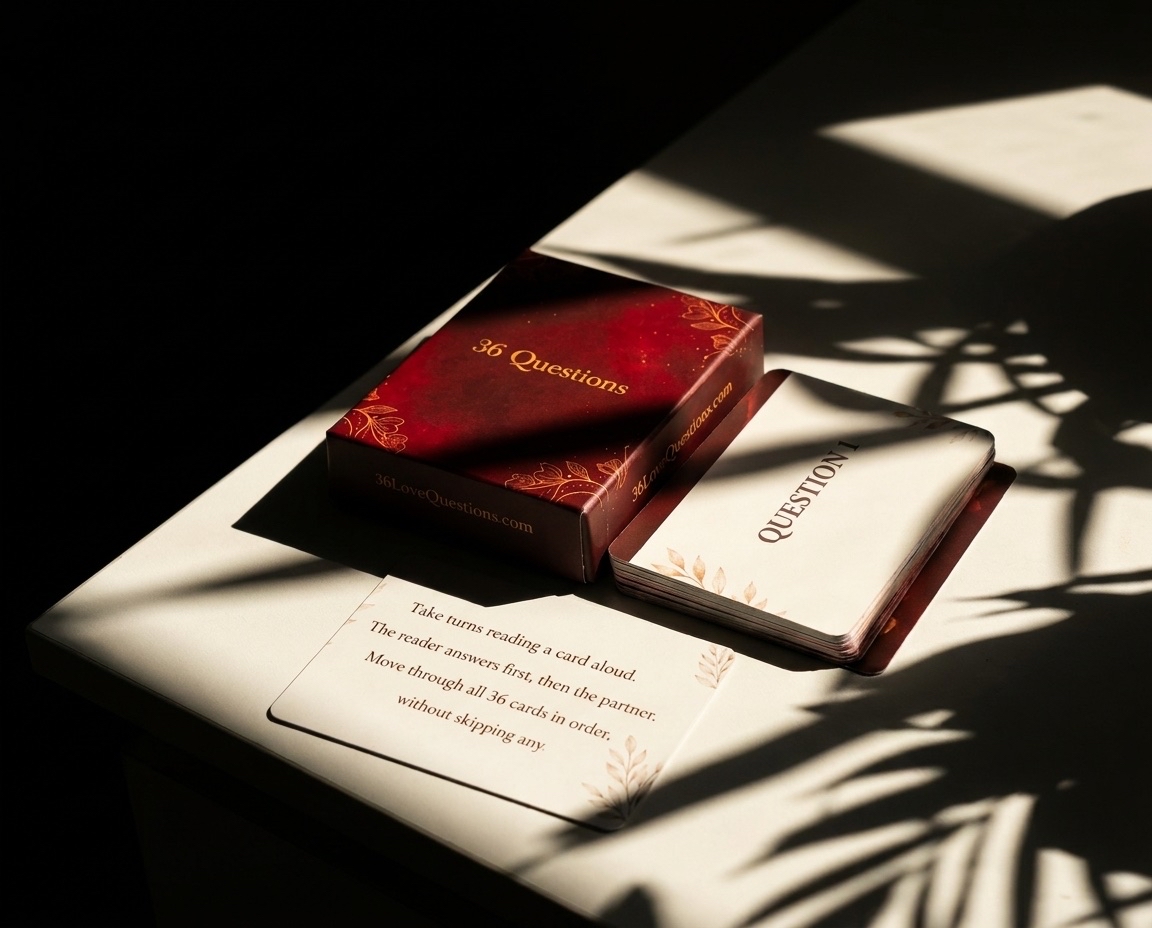
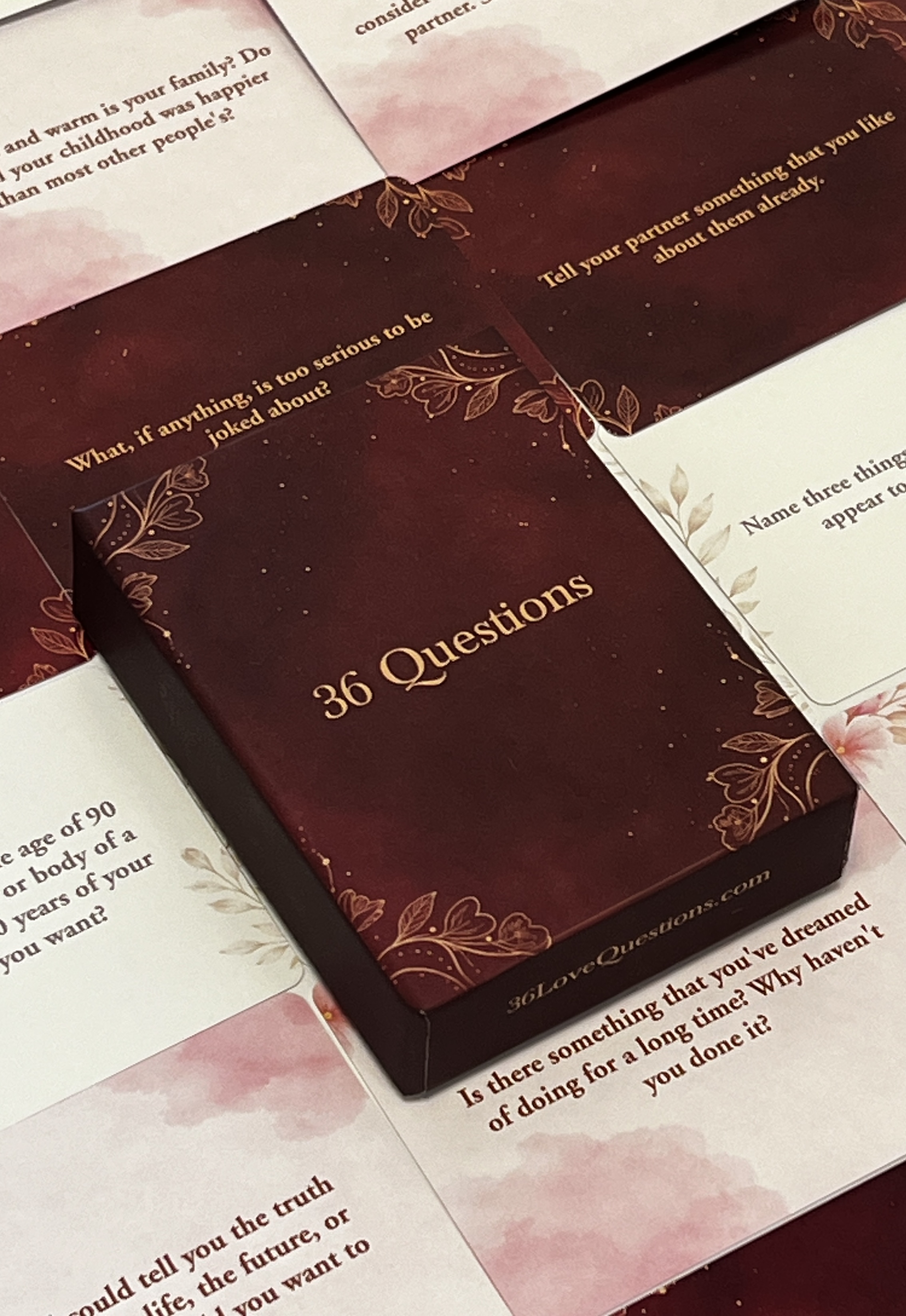
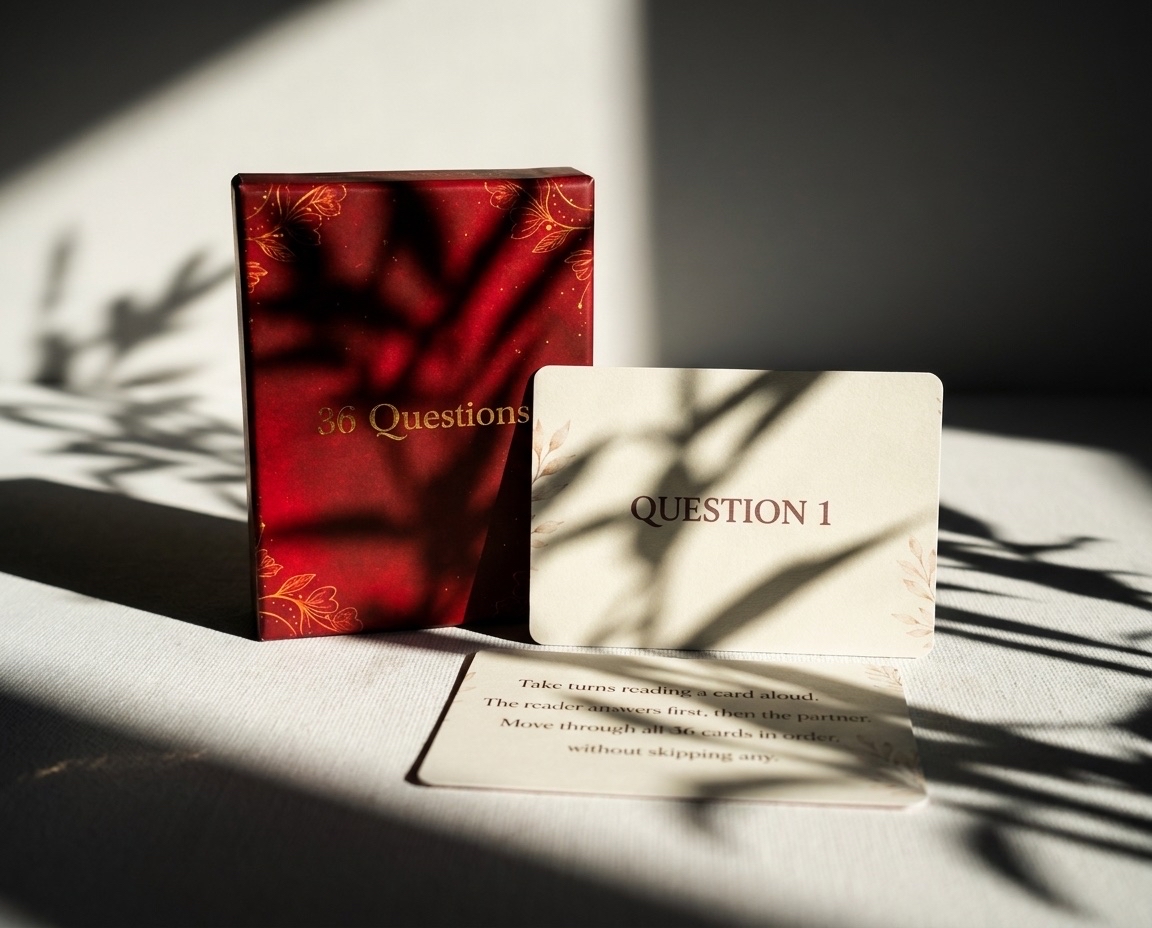
For people who find vulnerability genuinely hard, the 36 questions are an unusually well-designed practice scaffold: the structure does most of the work, and you mostly just have to show up.
The escalating curve of the questions takes you from light to deep over 90 minutes, the reciprocity rule means you're never alone in the disclosure, and the order means you don't have to choose what to share: the cards do that for you.
For couples where vulnerability has gone dormant, doing the 36 questions a couple of times a year is one of the most reliable resets. Full guide here, deck here.
4. Notice the cost of not being vulnerable
Vulnerability is uncomfortable. Not being vulnerable is also uncomfortable, it just compounds more slowly. The slowly-eroding closeness of long-term relationships is mostly the cost of years of very small editing.
Once you can feel that cost (we're roommates because I keep choosing not to say slightly honest things), vulnerability gets easier to choose, because the alternative is no longer free.
5. Receive vulnerability well
Half of the vulnerability practice is being a good receiver of your partner's. The receiver determines whether the disclosure produces closeness or shame.
Three rules of being a good receiver:
- Don't immediately advice-give. The disclosure is not a request for solutions.
- Don't immediately reciprocate so fast that you bury what they said. Hold their disclosure for a beat first.
- Don't ever, ever, weaponize what they shared in a later argument. Once is enough; you'll never get that vulnerability back.
The practice of receiving well is the part most couples skip. It's also the part that determines whether vulnerability becomes a sustainable practice in the relationship.
A note on doing this badly
The most common failure mode of "trying to be more vulnerable" is escalation without scaffolding. One partner reads about vulnerability, comes home, and dumps a heavy disclosure on the other partner who isn't prepared for it. The other partner receives it badly because they were ambushed. The vulnerable partner experiences it as a betrayal. Both feel worse.
The fix is the form. Practice the small versions for a long time before attempting the large ones. Use scaffolds (the 36 questions, the two-question dinner, the "what I almost said" rule) that distribute the vulnerability evenly between you.
Vulnerability is not a courage event. It's a practice. It compounds quietly over years. Most long, close marriages we've heard about are built not on a few brave conversations but on thousands of moments where someone said the slightly honest thing instead of the slightly easier one.