Unique Valentine's Day Gifts That Aren't Flowers or Chocolate
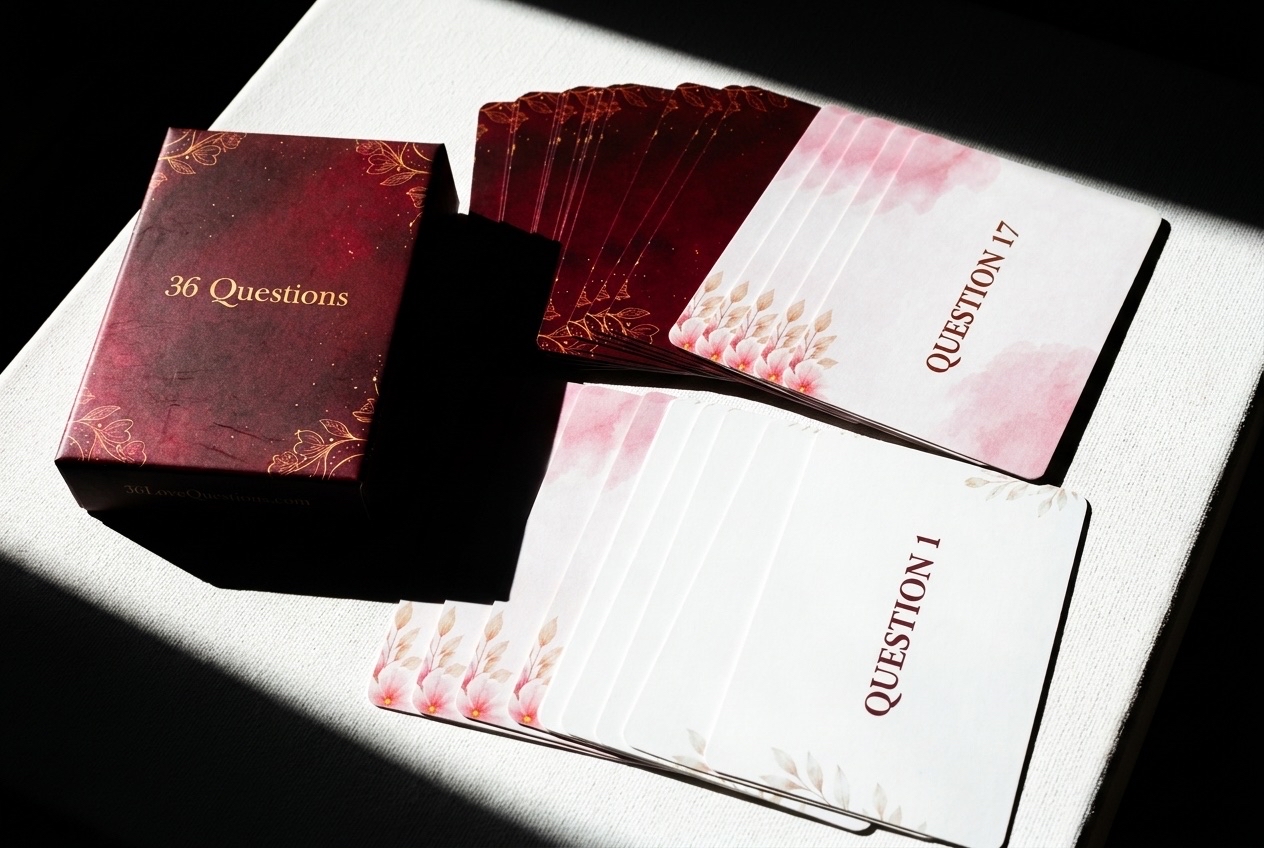
Roses and a heart-shaped box arrive somewhere between February 13 and 14 in the homes of approximately one hundred million couples worldwide. They are nice. They are also indistinguishable. Here are gifts that aren't.
The brief for this list: nothing that wilts in five days, nothing that gets eaten in twenty minutes, nothing that anyone could buy at a grocery store at 8pm on the 14th. Real, slightly braver gifts for partners you actually pay attention to.
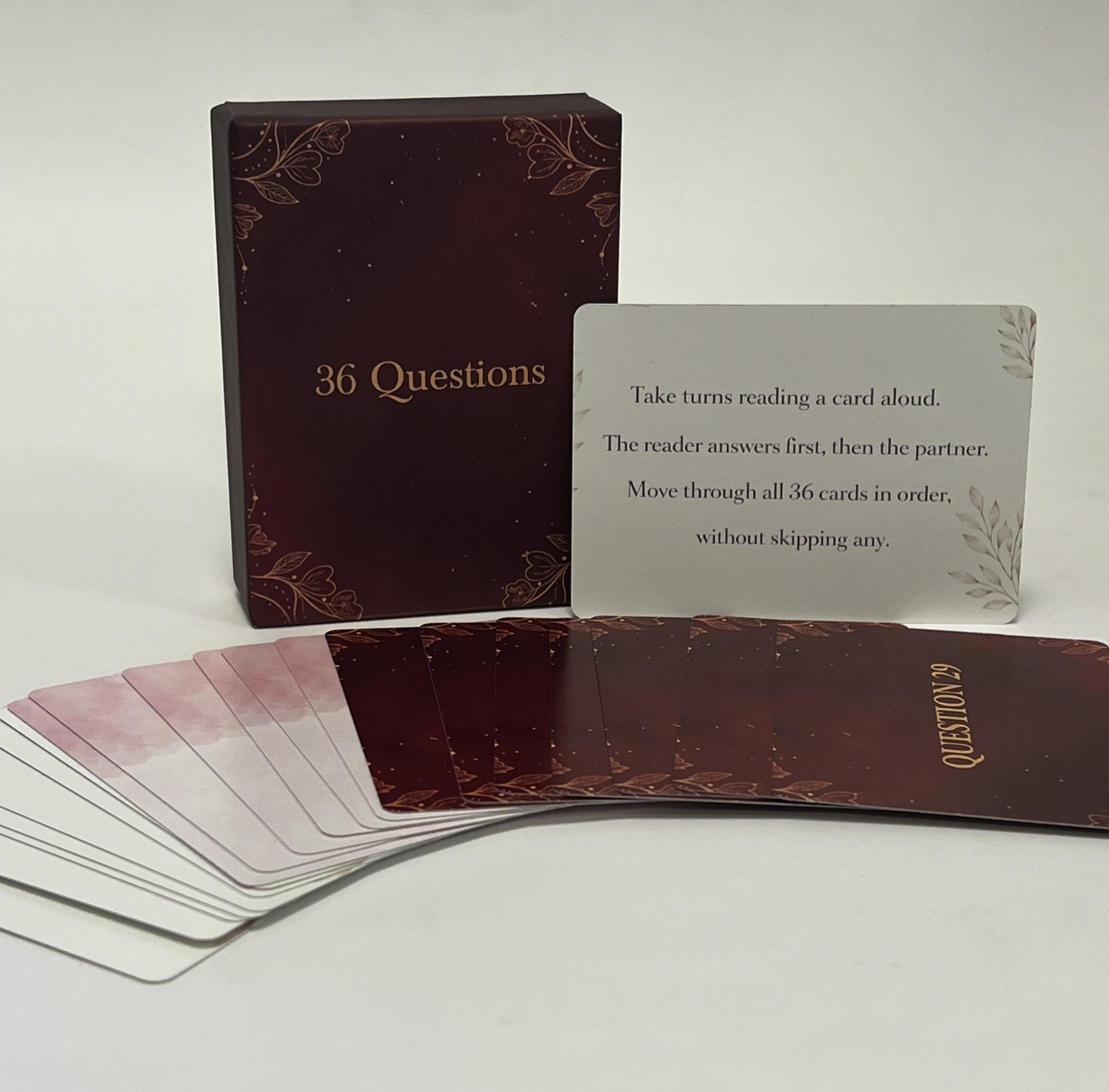
1. The 36 questions card deck
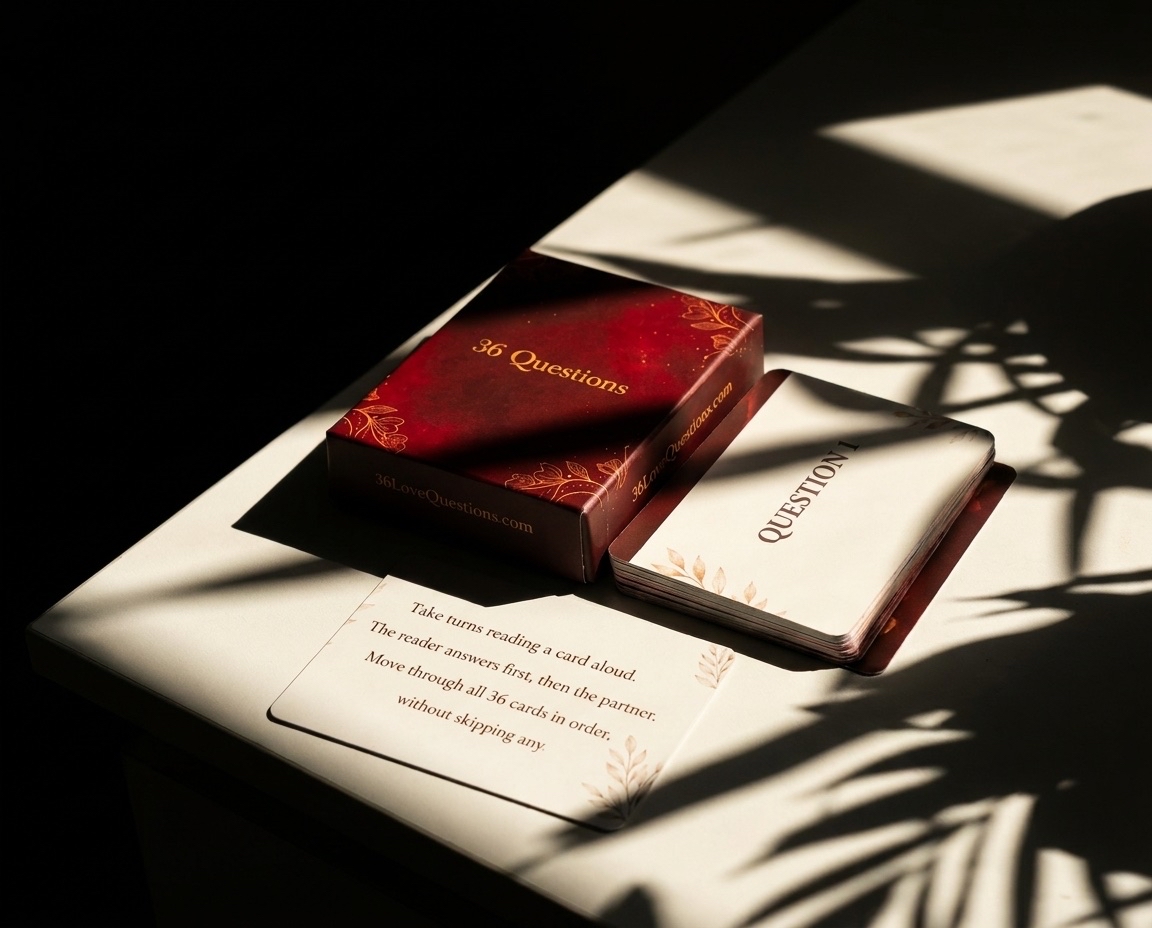
Yes, this is our thing, but it's a genuinely good Valentine's Day present and we wouldn't pretend otherwise.
The pitch: instead of dinner-and-a-movie on the 14th, propose a quieter night with the 36 questions. Hand the deck over with a card that just says "This is what we're doing tonight."
Why it works specifically for Valentine's Day:
- It addresses the actual problem of the holiday: Valentine's Day is supposed to celebrate the relationship, but most Valentine's Day gifts have nothing to do with the relationship's interior. The 36 questions are about the relationship.
- It's a one-evening commitment that produces a memory. The flowers will be in the bin in five days; the night you do the 36 questions you'll remember for years.
- It lasts the rest of your relationship.
Here's the deck. Pair it with a bottle of wine for the night.
2. A handwritten letter, in a sealed envelope, to be opened in five years
Most "letter to your partner" advice is to write it for now. The better version: write a letter to your partner, seal it, mark it with a date five years from today, and tell them they cannot open it until then.
The constraint changes what you write. You'll write the things you genuinely want them to know about who you both are now, that you'd want them to remember at a moment that doesn't yet exist. That's a different and more interesting letter than "happy Valentine's Day, here are some compliments."
Cost: zero. Effort: high. Effect: significant.
3. A reservation at the restaurant they don't usually let you book
There's almost always one restaurant in your shared life that one of you wants to try and the other thinks is too expensive, too weird, or too inconvenient. Book it for an off-night (the 12th or 16th, not the 14th; the 14th is amateur night for restaurants).
This is a much better gift than dinner on Valentine's Day. The restaurant will be calmer; the menu will be regular; you'll be choosing the night because you want to be there, not because the calendar says so.
4. A kit for something they've been meaning to learn
Specific. The watercolor kit. The bonsai. The lock-picking. The Italian lesson app subscription with a date already booked for the first lesson. The pottery class they keep mentioning.
The trick: don't give them an aspiration. Give them the smallest complete kit so the first attempt can happen this weekend.
5. A book + a printed schedule to read it together
Pick one book, fiction or non-fiction, doesn't matter, just a real book. Buy two copies. Print a tiny schedule of how many chapters per week. Wrap them together. The implicit gift is "we will both be reading this in February and March, and talking about it."
Couples who read together generate conversation effortlessly for weeks. It's the most reliable conversation-generator a small gift can produce.
6. A photo book of the past year
Print a photo book of the last twelve months. There are several services that do this well; the only constraint is that you do the curation yourself rather than letting an algorithm pick the photos. Pick ~60 photos. Caption them lightly.
The gift is not the book; it's the curation. The receiver knows you sat with their photos for an evening.
7. A "do anything you want" coupon, with a real budget attached
The classic "good for one favor" coupon is a joke gift. The version that works: an actual envelope with an actual amount of money in it (or a transferred amount), with a printed note: "This is for the one thing you keep saying we should do. Pick it; book it; tell me when. I'm in."
The constraint of putting a real budget on it forces commitment. The version where one partner picks the night is much better than the version where you pick it.
8. A subscription to a thing only they would like
Not Spotify Family. Something specific to their interest: a wine club focused on one region, a magazine for one hobby, a tea subscription for that one tea they like, a service that sends them a single book per month curated by a real bookseller.
The thoughtfulness lives in the narrowness. Specific subscriptions feel personal. Broad subscriptions feel like a Costco membership.
9. A "two-question" jar
A small jar with 50 slips of paper, each containing one open-ended question for the two of you. The rule: pull one out together at dinner once a week, both answer.
You can write your own. You can also use selected questions from the 36 if you don't want to commit to the full deck format. We'd suggest a mix of light and heavy:
- What's a small thing I do that you've never told me you like?
- What's something you've changed your mind about in the last year?
- Who's a friend of mine you wish you knew better?
- What do you wish we did more of?
The jar is the gift. The 50 weekly conversations are the value.
10. A boxed kit for a single, slightly extravagant night in
Pick one specific night-in concept and buy the components: a four-course meal kit + the right wine + a set of taper candles + one new playlist. Wrap them together. The recipient gets to host the evening on a date of their choosing.
This works because the friction of an at-home special-occasion dinner is logistics, not desire. Removing the logistics is the gift.
A note on Valentine's Day specifically
Most Valentine's Day gifts are bought to discharge the obligation of the day. The few really good Valentine's gifts have nothing to do with the day; they could just as well be given on March 4th. They're gifts that say I notice you specifically, not the calendar says I have to do something today.
That's the test. Would this gift make sense in May? If yes, it's a real gift. If not, it might just be a heart-shaped box.
Three small things that turn an okay Valentine's gift into a memorable one
Across all of the categories above, three small moves quietly upgrade almost any Valentine's gift from "fine" to "remembered for years":
- Pre-stage the night the gift unlocks. A jar of prompts is a thing. A jar of prompts plus a candle, a bottle of wine, and "we're doing this Saturday at 8" is a plan. The plan is the gift; the object is the trigger.
- Write the note by hand and put it inside the box, not next to it. A typed note next to a wrapped present is logistics. A handwritten note discovered after they open the lid is a small ambush of warmth. The discovery sequence matters more than people think.
- Make it the opening of the evening, not the climax. Most people give the present at the end of the date and the date peaks. Give it at the start instead (a little ritual at 6:45) and the entire evening becomes the gift, not the wrapped object.
If you want one specific recommendation: give them the deck and plan to do the questions that night. It costs less than dinner and reservation, and it does more.