36 Questions for a First Date: A Real Playbook
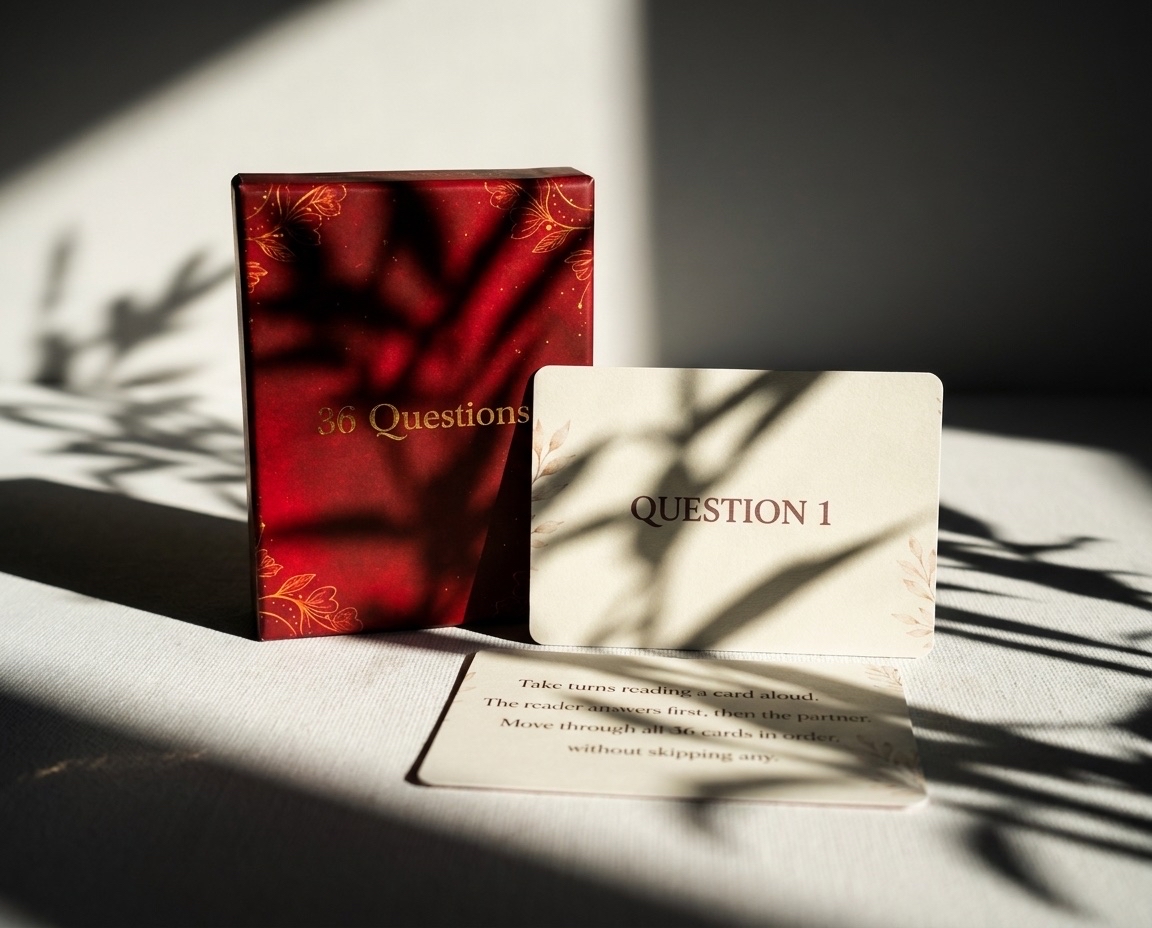
Doing the 36 questions on a first date is one of those ideas that's been romanticized into something that almost no one actually executes. Here's how to do it for real, including the parts that don't show up in the NYT essay.
Whether you should do it at all
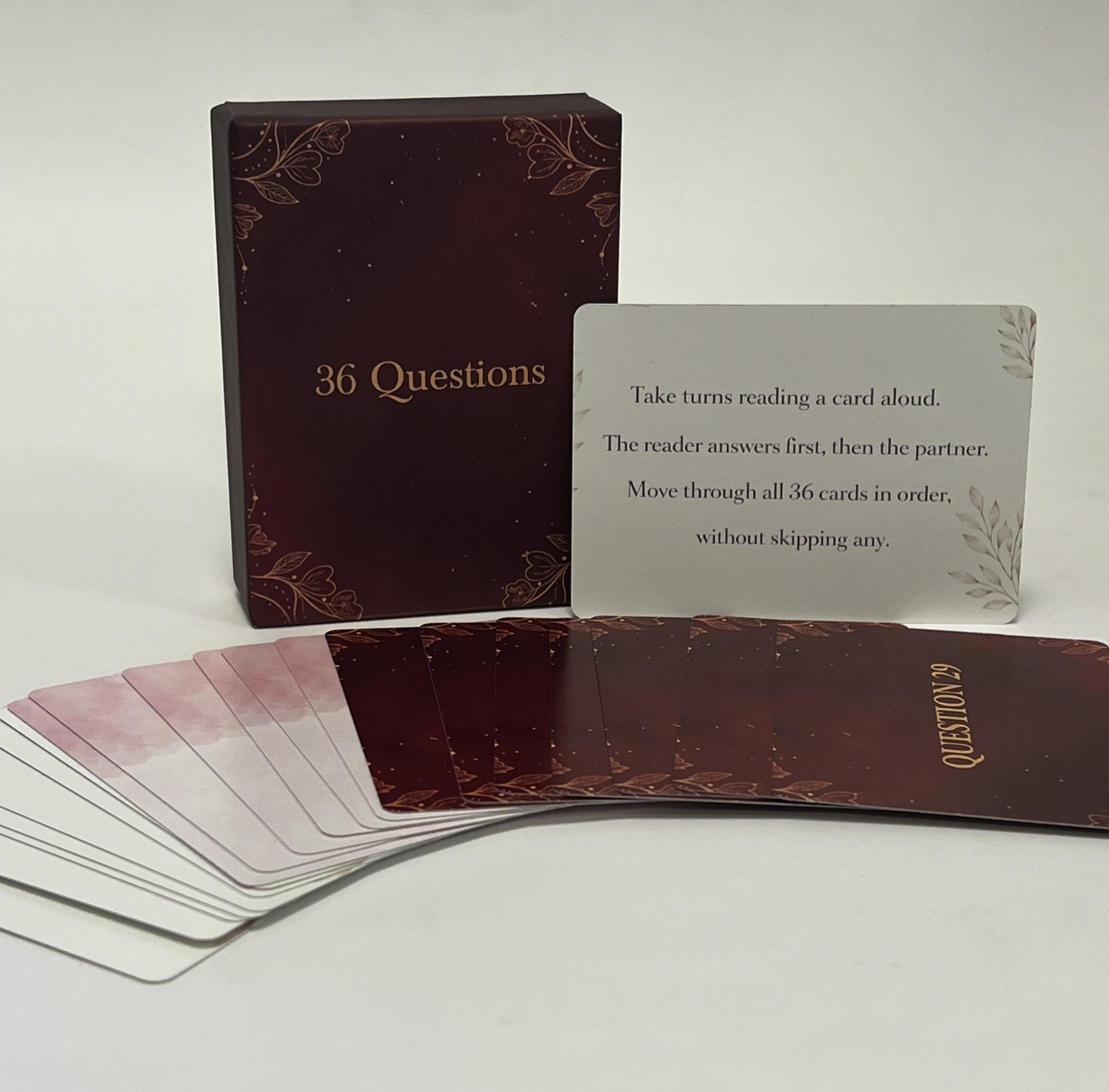
Honest answer: not on every first date. The questions need a partner who can do escalating, reciprocal honesty for an hour. Most first dates aren't that.
Don't propose the 36 questions on a first date if:
- You haven't messaged each other for at least a few days. The questions assume a baseline of mutual interest. They're not a screening tool.
- You're meeting in a bar with loud music. The form requires being able to hear each other comfortably for 90 minutes.
- You suspect they're "performing." If their dating profile reads like a brand pitch, the 36 questions will feel like more performance to them. Wait for date two.
Do propose the 36 questions on a first date if:
- You've already had a long, honest text exchange and want to skip the small-talk phase of the in-person date.
- You both opted in. The questions don't ambush well. Mutual buy-in matters more than romantic chemistry.
- You have a quiet venue lined up. A booth, an apartment, a park bench in good weather, a long walk somewhere quiet.
How to actually propose them
Don't be coy about it. The most effective wording is something like: "There's an old psychology study with 36 questions that are supposed to help two people get past small talk. I think it'd be more interesting than the standard date. Want to try them?"
Send this beforehand, not on the date. Give them a day to think about it. If they're hesitant or evasive, drop it. The questions don't work on a date that has been talked into them.
Setting
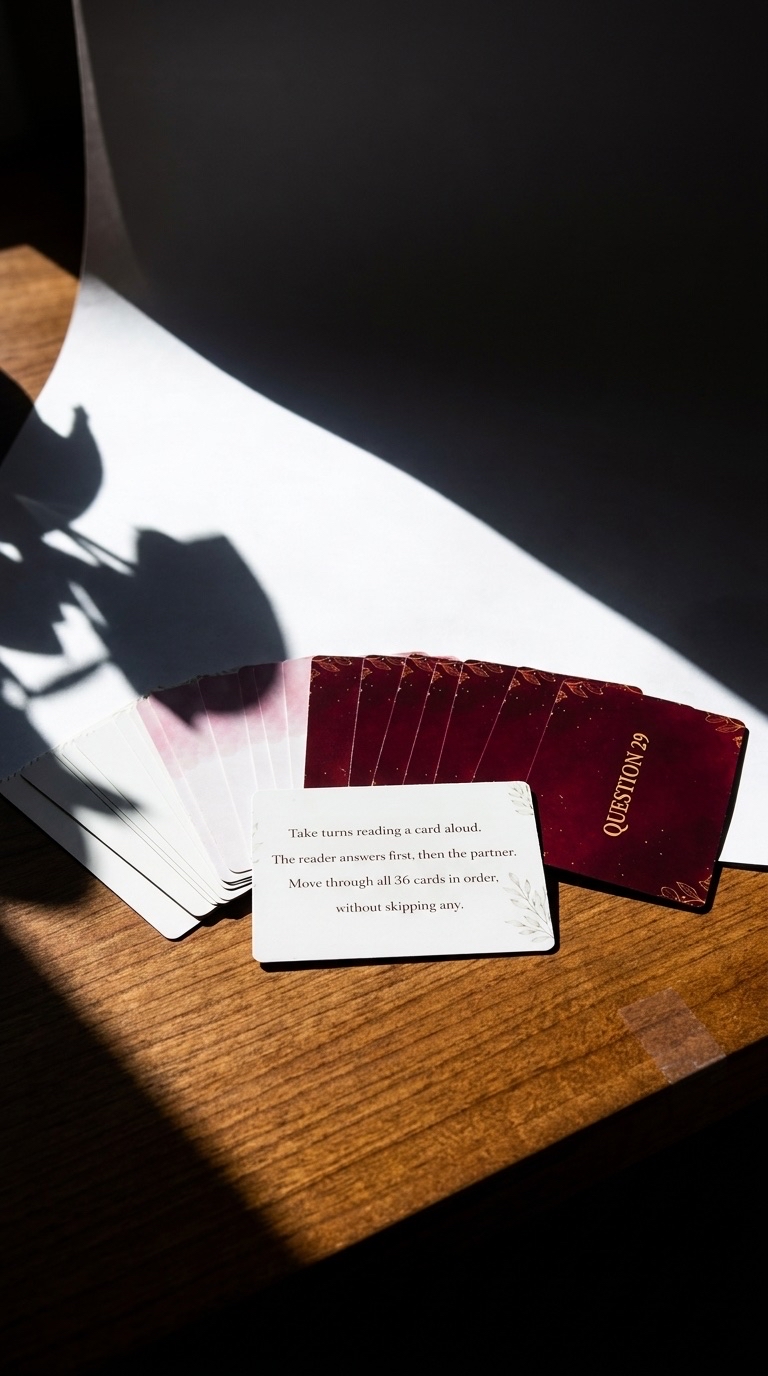
A few things that work, in roughly increasing order of intimacy:
- A two-hour walk, then a quiet bar booth. Walk the first half of Set I while moving; sit down for Set II onward. The change of state matches the escalation.
- A long café table in an off-peak window (Tuesday at 2pm beats Saturday at 8pm).
- A picnic somewhere quiet enough to hear each other.
- One person's home, after a meal out. Riskier, but the eye contact part works much better when you're not in public.
What doesn't work: loud restaurants, group dates, anywhere with a TV in your line of sight, anywhere with a server checking on you every five minutes.
What to skip on date one
The 36 questions in their original form do not skip any cards. On a true first date, this is unrealistic for most people. A reasonable compromise is:
- Do all of Set I. Twelve cards, all light enough for a first date.
- Do most of Set II. Card 18 ("most terrible memory") and Card 24 ("relationship with your mother") are the two that legitimately benefit from skipping on date one. They tend to land better with someone you've spent more than a single afternoon with.
- For Set III, do a short version. Cards 25, 27, 28, 29, 31, 32 work beautifully on a first date. Cards 33–35 (mortality and loss) are usually too heavy for a first meeting.
If you're using a deck, separate the optional cards before the date. Don't deliberate mid-game.
What to do if they don't take it seriously
Some people will treat the questions as a comedy bit. They'll answer #1 with "Hitler, but only to ask why." They'll answer #4 with "this date is my perfect day, baby."
If this happens, you have three options, in order of escalation:
- Match the joke once, then answer the question seriously yourself. This often resets the tone: they see you go first, take it slightly seriously, and they recalibrate.
- Name it lightly. "Okay you're being a goblin about this, let me try going first?" Said warmly, this works most of the time.
- Stop. If the third question is also a joke, the questions aren't going to work on this date. That's information. Switch back to a normal date.
It's not a failure to stop. The 36 questions are not a personality test. Lots of compatible people are not in the right state to do the questions on a first meeting.
What to do if it gets too intense
This is more common than the goblin problem. Sometimes one person is more willing to disclose than the other, and the depth runs ahead of the comfort.
Useful moves:
- Match their depth, not the question's depth. If they answered Card 18 ("most terrible memory") with a small story, you should answer with a similarly small story even if you have a bigger one. Don't sandbag them with a heavier disclosure.
- Take a 60-second break. "Want to refill our drinks?" Genuinely useful at the bridge between sets.
- Skip a card with a one-sentence reason. "I think I'm going to skip this one, it feels heavier than I want for a first date." Said openly, this is fine. Said while squirming, it's awkward.
The point of the questions is not to extract the heaviest possible disclosures. It's to do the structure. The structure works at any consistent depth (light or deep) as long as both people stay in the same lane.
Eye contact on a first date
Most people skip the four-minute eye contact on a first date. We think this is a mistake. Skipping the eye contact removes maybe 30% of the closeness effect, and the eye contact is also genuinely interesting on a first date. You learn a lot about someone in four minutes of silence with them.
If you're going to do it, set the timer at the table where you've been sitting and just do it. Don't relocate, don't ceremoniously announce it, don't make eye contact while standing. Sit, set the timer, look.
Afterwards
Don't immediately ask "so, what did you think?" Let the date end like any other date. Walk to the train. Say goodnight. The conclusions will form on the way home.
A useful litmus test, not for the date but for you: did your model of this person sharpen or soften in the last 90 minutes? Either is a good sign. If your model didn't change at all, the questions didn't work, for whatever reason, and it's data about either the moment or the match.
If you want a deck
A boxed deck is unfussy on a first date. It lives in your bag, comes out at the table, doesn't require anyone to remember the rules. Ours is here. If you don't want to buy a thing for someone you've just met, the printable list is fine.
Three small first-date moves that work with or without the deck
Even if you skip the questions entirely, three small moves quietly shift first dates from "interview" to "actual conversation":
- Pick the venue with the conversation in mind. Almost every bad first-date conversation is a venue problem in disguise. A loud cocktail bar at 8pm on a Friday is not built for honesty. A quiet wine bar at 5:30 on a Tuesday is. The venue does about half the work.
- Eat first, drink second. Counterintuitive but reliable. A first date that starts with cocktails on empty stomachs ends in either over-disclosure or over-performance. A first date that starts with food creates a settled baseline before the alcohol changes the lane.
- End the date deliberately. Don't let it dribble to a close. Stand up, say something honest about whether you'd want to do this again, leave. The intentional close is what people remember; the meandering close is what they don't.
These three apply whether or not the 36 questions are on the table. The questions are an accelerant, not a substitute for the basics.
What matters is the form, not the medium. Go in honestly, match each other's depth, end with the eye contact. The rest takes care of itself.