36 Questions Card Game vs. The Original List: What Changes?
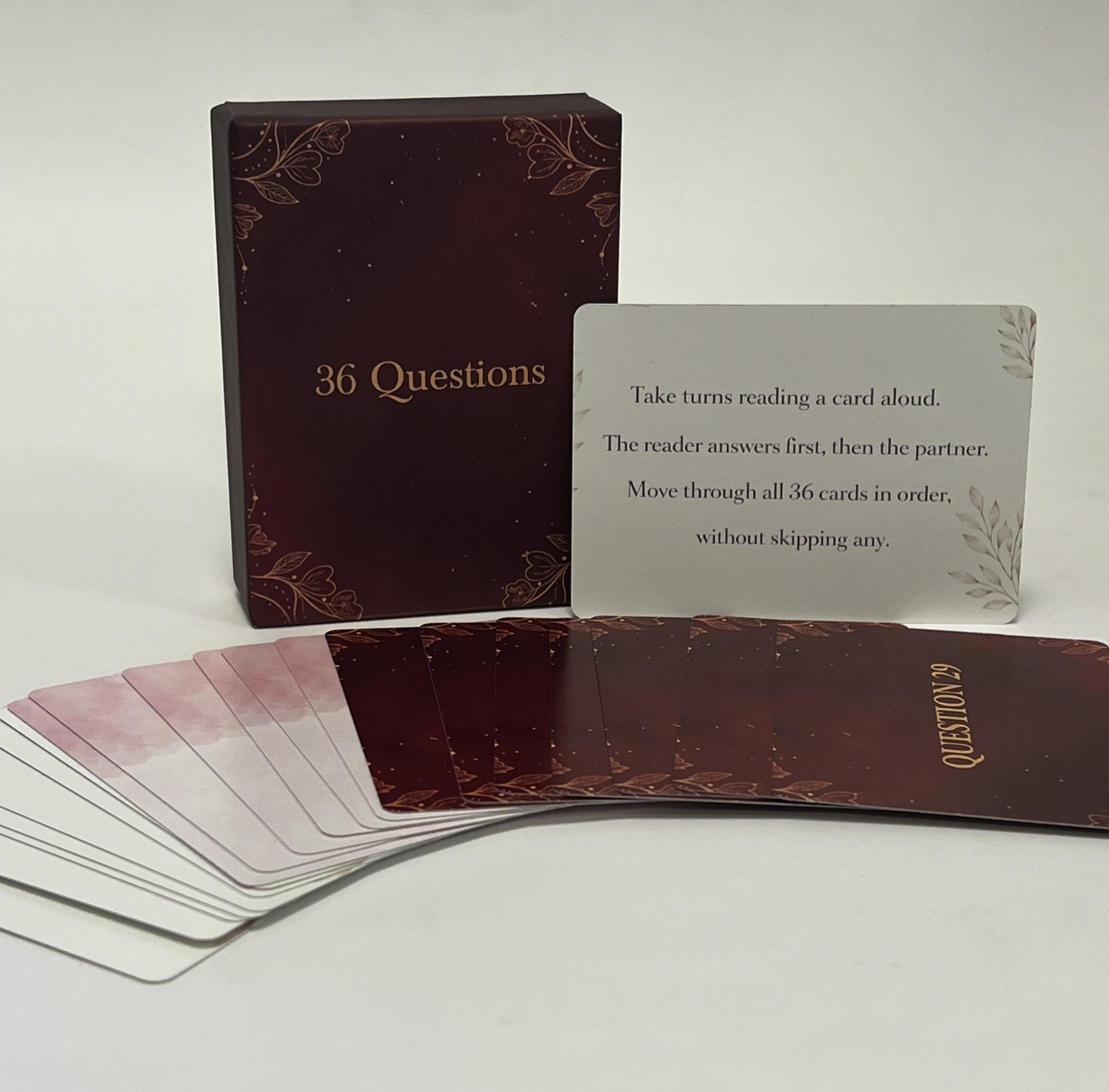
We make a card deck of the 36 questions, so this comparison is not neutral. But the honest case has to be made anyway, because the answer to "should I buy the deck?" is genuinely not always yes.
The list is freely available. We publish it ourselves. You can print it on a sheet of paper for free. So the question is whether the physical object adds something the printout doesn't.
Here's the actual comparison, from people who use the deck weekly and have watched hundreds of couples try it both ways.
What you get from the printable list
The printable list does the core job. The questions are the questions. If two people sit at a table with a printed sheet, take turns reading aloud, and don't skip any, they will get most of the closeness effect that the original study reported.
There are real upsides to the paper version:
- It's free. This matters and we shouldn't pretend otherwise.
- You already know if you'll do it. No object to procrastinate on. Print, fold, do it tonight.
- No "what if it sits in a drawer" risk. If you're already a person who reliably executes things, the printout is fine.
There are also real downsides, and they show up the same way every time:
- Phones win the table. When the questions are on a sheet of paper, phones tend to sneak back in. People look up answers, take photos of "good ones," check the time. Each phone glance breaks the eye-contact thread.
- The order gets gamed. Couples skip ahead to the "interesting" ones. The order isn't aesthetic: it's an escalation curve, and the closeness effect depends on the curve.
- Reading aloud feels weird from a sheet. The printed list visibly communicates "we are doing An Activity." A card with one question on it lowers the formality of each prompt.
- Long-term couples open the PDF, glance at it, and say "we should do this sometime." They never do.
What you get from a deck
A physical deck is the same content with a different form. The form changes what people actually do.
Three things the cards quietly enforce:
- One question at a time. You can't see the next card. You can't skip ahead. You can't accidentally read the answer-key for question 27 while answering question 22. The escalation curve is preserved by the form factor.
- Phones leave the table. A deck of cards on a kitchen table is an object that physically asks the room for attention. It doesn't compete with screens the way a sheet of paper does. (You'd be surprised how reliably this effect happens.)
- It's a present. A printed PDF is not a gift. A boxed card deck is, whether for an anniversary, a wedding, a long-distance partner, or a friend who just got engaged.
There are also things that have nothing to do with the questions but that buyers tell us matter:
- The deck lives somewhere (usually in a drawer near the kitchen), which means you remember it exists. PDFs are deleted in a year.
- The deck gets re-used. Couples who buy it tell us they pull it out 3–6 times a year, on dates, road trips, anniversaries.
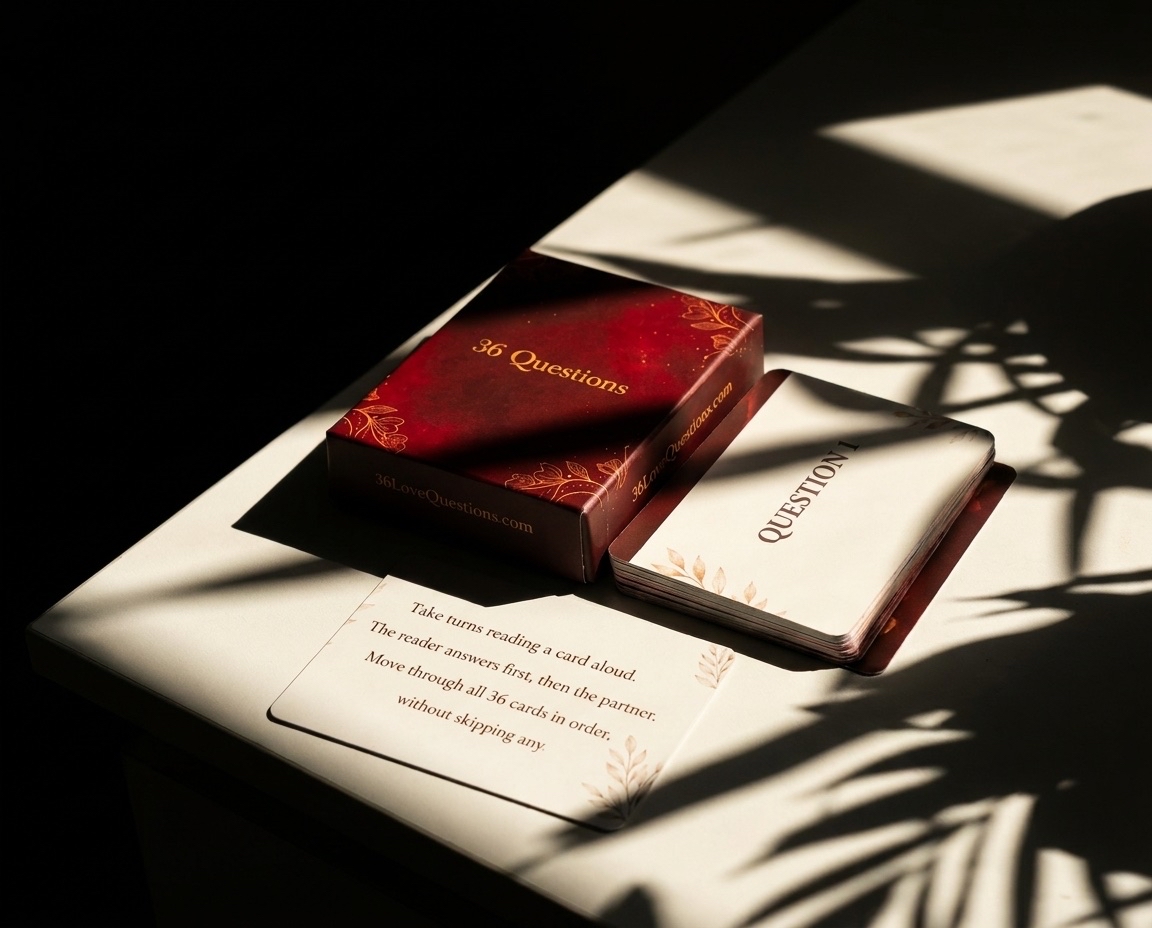
- The instruction card on top means you don't have to remember the rules. This sounds trivial. It is not. The single most common reason couples do the questions wrong is that they forget the procedure.
When you genuinely don't need the deck
Buy the paper list (or use ours, free) if:
- You're doing it once, tonight, and you know yourself. Some people execute. If you're one of them, save the money.
- You travel light and don't want one more object.
- You're testing the waters with a new partner and don't want the optics of "I bought us a card game."
- You're broke. This is a real reason. The deck is not essential. The questions are essential.
When the deck is genuinely worth it
Buy the deck if:
- You're giving it as a gift. This is the use case the deck was designed for. A printed PDF in a card is awkward; a boxed deck is not.
- You and your partner are long-term and out of conversation. You'll never open the PDF. You'll open the box.
- You're using it as a recurring practice: date nights, anniversaries, post-fight reconnection.
- You want phones off the table and you've tried "let's just put them away" and it didn't stick.
- You want the eye-contact piece to feel like a real ritual rather than an afterthought scrawled at the bottom of a sheet.
What's actually in the deck
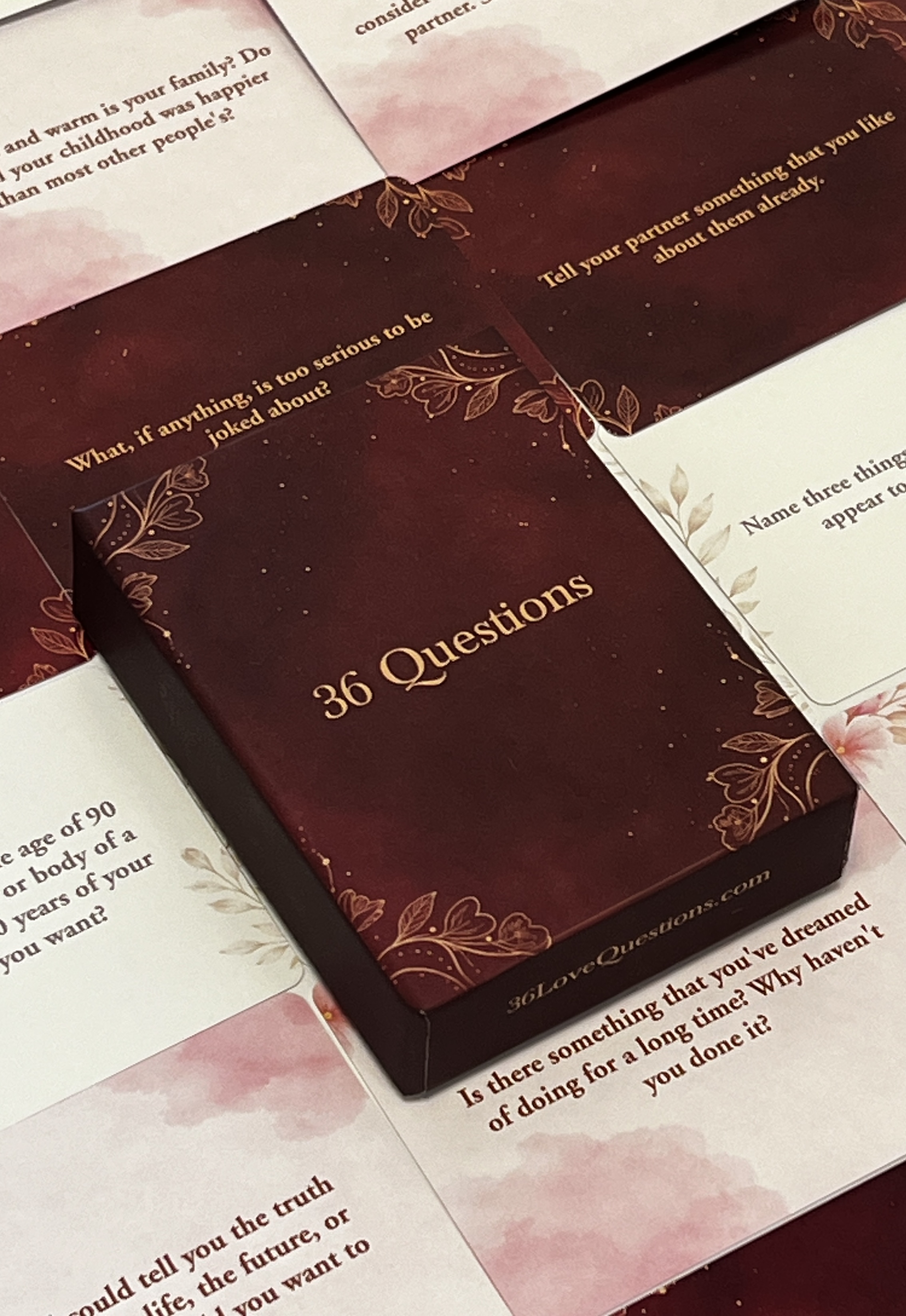
For full transparency: our deck has the original 36 questions in their original wording and order, one per card, plus a single instructions card with the procedure on it. The deck is housed in a rigid magnetic-closure box with the brand on the bottom edge. There are no "bonus" questions, no apps, no QR codes, nothing to scan. The whole point is to be the opposite of a screen.
Six small differences that quietly add up
The deck-versus-list debate sounds like a wash on paper. In practice, six small differences keep showing up in the feedback we get from couples who've tried both:
- The deck makes the start of the evening obvious. With a list on a phone, the question of "okay, are we doing this now?" stays vague for ten minutes. With a deck on the table, the answer is "yes, the box is open."
- The deck removes the next-question decision. Reading from a list, your brain involuntarily previews question 5 while you're answering question 4. The deck shows one card at a time on purpose: the anticipation is part of the experience, not the preview.
- The deck enforces order. With a list, the temptation to skip ahead to "the famous ones" is real and ruinous. The escalation is the mechanism; the deck protects it without you having to.
- The deck makes pacing visible. A small stack of remaining cards is more honest about where you are in the protocol than a percentage on a screen. People naturally slow down when they can see how many are left.
- The deck doesn't get a notification. This is the one we hear about most. Even on Do Not Disturb, a phone in the middle of a vulnerable conversation is an attention-thief. A deck never is.
- The deck remembers it exists. A list lives in a tab you'll close and forget. A deck lives in a drawer you'll see when you're putting away the placemats and remember, oh, we should do those again.
None of these are dramatic individually. All six together explain why the same couple, given the same questions in two formats, often actually finishes the protocol with the deck and quietly bails halfway through with the list.
When the list is genuinely the right call
To be fair to the list:
- One-time use, low budget. If you're doing the questions once for a workshop or a curiosity, the list is fine.
- Long-distance over video. If only one of you is going to "hold" the questions and you don't want to ship cards across an ocean, the list works.
- You're prone to losing physical objects. Not a joke. Some people genuinely live more digital lives.
If that sounds right, it's here. If it sounds like more object than you need, print the list and do it tonight. The questions are what matter; the form is what gets you to actually use them.