Valentine's Day Ideas for Long-Term Couples (Beyond the Reservation)
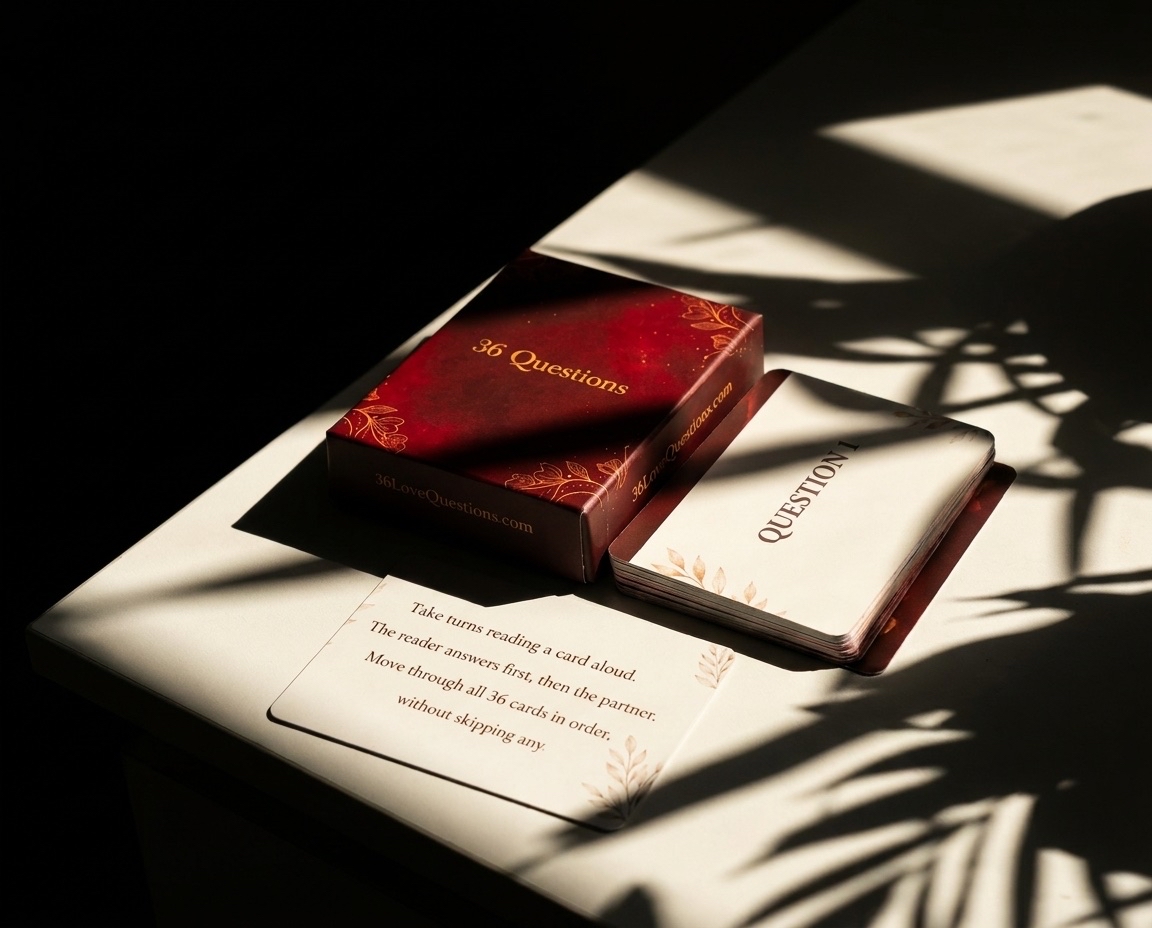
Valentine's Day in the seventh year of a relationship has a particular energy. You both feel obligated to do something. You both also feel mildly resigned to whatever you do being a slightly worn-in version of last year. The restaurant will be loud. The flowers will be expensive. You will be tired by 9pm.
Here's how to do Valentine's Day in a long-term relationship in a way that doesn't fight the holiday but also doesn't surrender to it.
The general principle
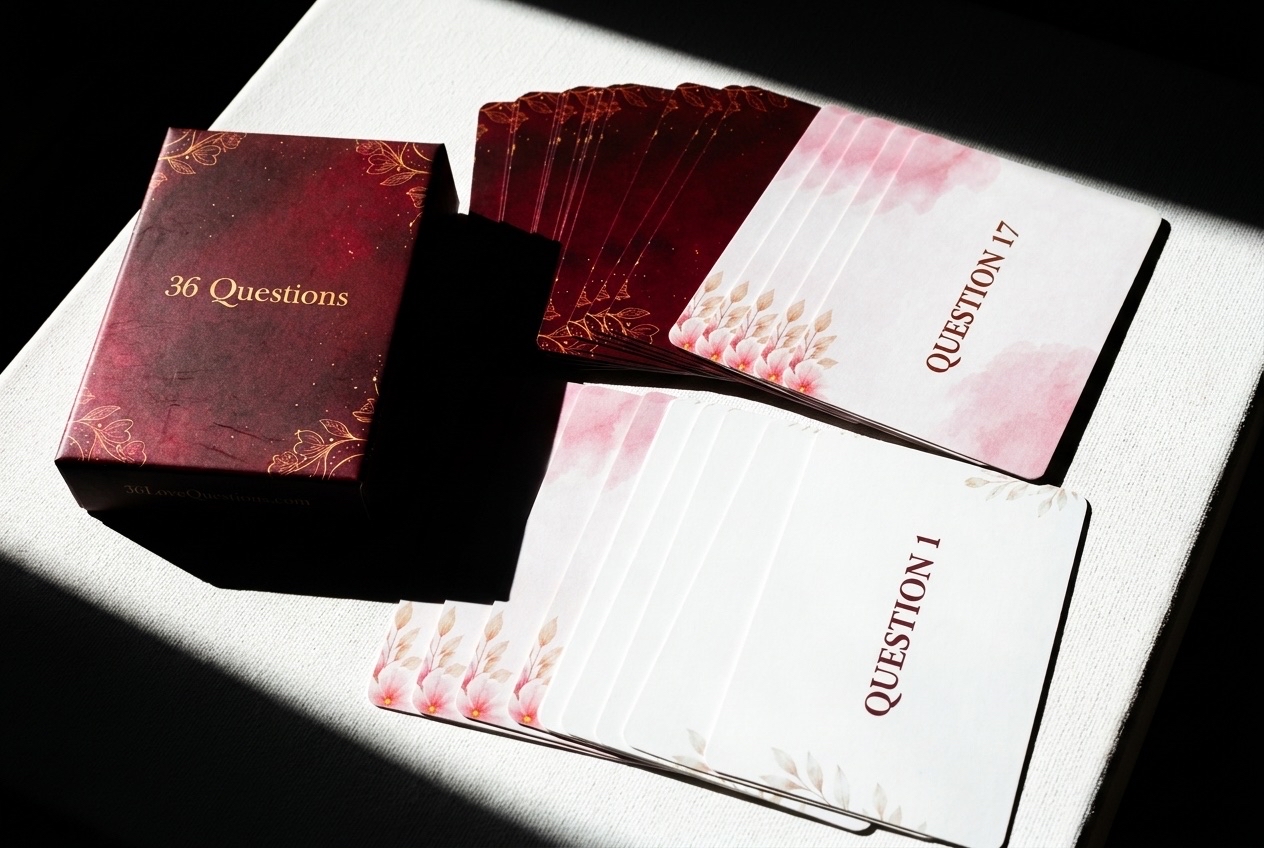
Long-term Valentine's Day works best when you stop performing the holiday and use it as a forcing function for one specific thing you've been meaning to do together.
The holiday's actual job in a long-term relationship is just that: to be a fixed date that gives you permission to do something deliberate. The flowers are decoration. The reservation is logistics. The deliberate thing is the point.
1. Do the 36 questions, properly, that night
Our pitch and we won't pretend otherwise.
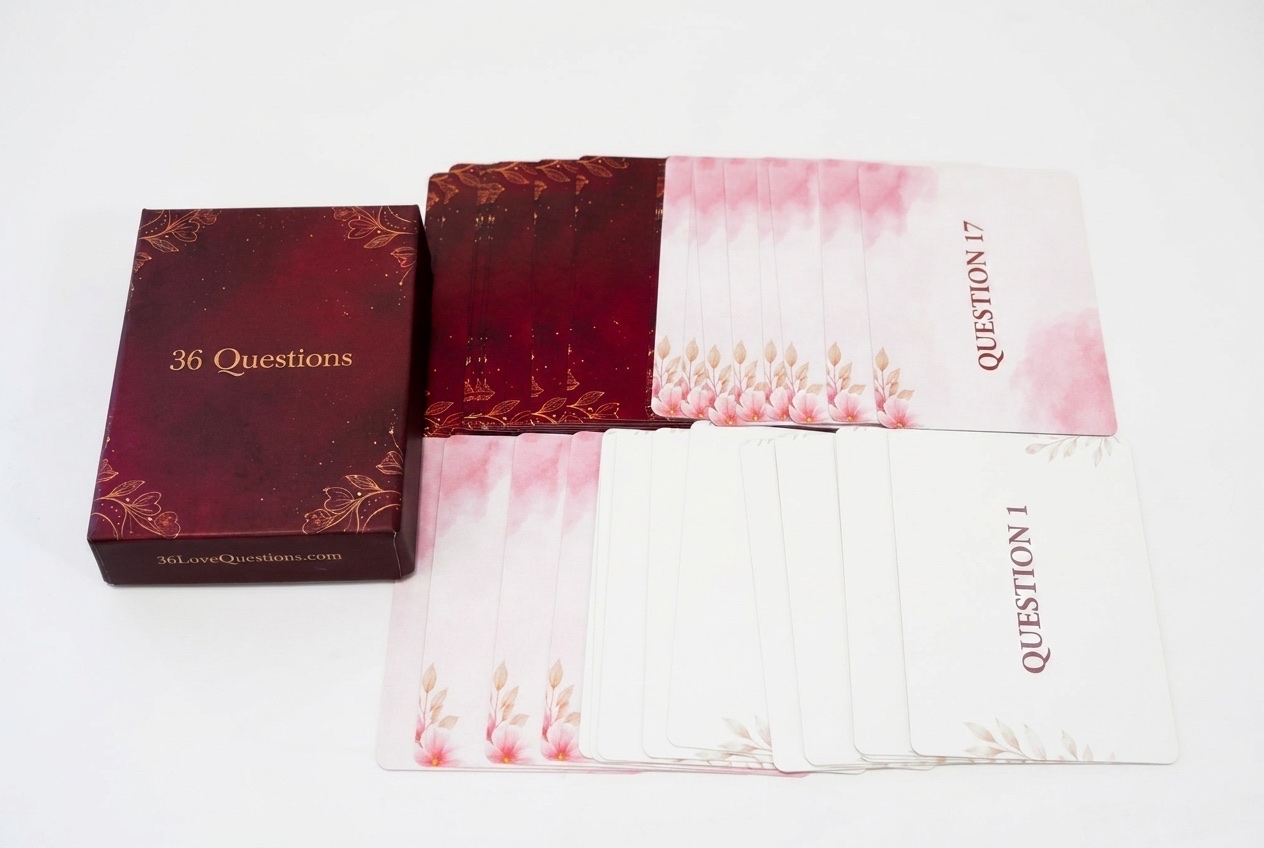
Block the evening. No reservation. Cook something simple at home or order in. Pour something good. Do all 36 cards, all three sets, the four minutes of eye contact at the end. Plan 90 minutes. The full guide is here.
For long-term couples, this is one of the most-reported-back evenings we get. It's the thing nobody plans because it sounds intense and ends up being the thing they remember years later.
If you don't already own the deck, it's here. If you have the printed list, it's here. Either works.
2. The "no reservation" Valentine's: dinner at the bar
A small but excellent move: instead of a Valentine's reservation at a restaurant, walk into one of your favorite restaurants at 5:30pm on the 14th and sit at the bar. Eat off the bar menu. Drink something nice. Leave by 7:30.
Why it works for long-term couples:
- No reservation pressure. You can leave at any time.
- Bar seating is more conversational than a romantic two-top.
- The early time-slot is genuinely more pleasant than the 8:30 Valentine's slot.
- You skip the "Valentine's prix fixe", which is rarely the restaurant's best work.
3. Two-restaurant Valentine's
For couples in a city: book early dinner at one favorite restaurant, dessert at a different favorite, walk between them. Make the walk the date. Keep both meals short.
Two restaurants and a walk produces three small environments and 90 minutes of conversation between courses. It's a small change but the energy is completely different from the standard one-spot reservation.
4. A Saturday morning, not a Saturday night
For long-term couples (especially with kids), the most under-used Valentine's option: book it in the morning. Breakfast somewhere good, a long walk, a museum, lunch, home by 3.
Mornings are calmer than evenings. You'll be present. The day has not yet been spent. This works absurdly well for parents in particular: the morning hours are the ones with the most untapped energy in a long-term relationship.
5. The "year in review" night
A small ritual that works in any long-term relationship:
- Both of you separately, in advance, write down 3 favorite memories from the past year.
- Both of you separately write down one thing you're hoping for in the year ahead.
- On the night, share both lists out loud, taking turns.
That's it. Maybe 30 minutes. The rest of the night can be normal.
The closeness boost from this small exercise is wildly disproportionate to the effort. Long-term couples almost never review the year together explicitly; doing it once turns out to be moving every time.
6. The classic at-home: but with a phone basket
The basic at-home Valentine's (cook together, eat by candlelight, watch something) works, with one structural addition: a phone basket. Both phones in a basket in another room from 7pm to bedtime. Non-negotiable.
The "we ate at home and watched a movie" Valentine's fails not because it's a bad plan but because phones win the room. Removing the phones costs nothing and changes everything.
7. The short-trip Valentine's
If you can: one night, somewhere within an hour of home, that you've never stayed at before. Doesn't need to be the 14th: the weekend before or after.
Long-term couples consistently report that the closest thing to "an actual reset" they get is one night in a hotel they've never been to. It's the contrast that does it. Same partner, different sheets, different bathroom. Your model of the relationship temporarily reboots.
8. The no-gift Valentine's, with a deliberate replacement
For couples who don't really do gifts but feel pressure to: explicitly agree to skip gifts this year and deliberately substitute one specific shared thing that would have cost the gift money.
The substitute could be a class booked together, a trip booked, a donation in your joint name, or a single splurge dinner with a wine you wouldn't usually buy. The point is making the no-gift thing intentional rather than half-hearted.
9. The "what changed this year" dinner
Over dinner, one prompt: what's something about you (or about us) that changed this year that I might not have noticed?
Both of you answer. Slowly. No phone-checking. The dinner is built around this single question.
This works because long-term couples are constantly updating without updating each other. The dinner gives a small window to declare an update.
10. Valentine's Day on a different day
Put the actual celebration on the 16th, the 18th, the 21st. The 14th is amateur night. Restaurants are full of first-date couples; quality drops; service is slower; the energy is loud.
Long-term couples are perfectly positioned to skip the date and do the holiday on a quieter day. The romance does not require the calendar to agree.
What all of these have in common
The unifying thread: long-term Valentine's Day works when you treat the day as a structure, not a script. The script (reservation, flowers, chocolates, photos for Instagram) is what made you tired of Valentine's Day. The structure (a fixed date that gives permission to do one deliberate thing) is what makes it useful.
Pick the one deliberate thing. Most years it can be small.
A short list of long-term Valentine's red flags
Plans that sound nice and consistently disappoint long-term couples, worth naming so you can avoid them:
- The "surprise getaway" without consultation. Romantic on paper. Stressful in practice if either of you has a deadline, a sick parent, or a Sunday meeting on the books. Long-term partners need coordinated surprises, not unilateral ones.
- The "we'll figure out where to eat" Valentine's. On the 14th, every walk-in spot has an hour wait. The day punishes spontaneity. Either book or stay in.
- The performative gift exchange. Two wrapped presents on the table that you both feel obligated to ooh-and-ahh over. Long-term couples are generally past needing this; agree to skip it.
- The "let's just get through it" Valentine's. The most common long-term failure mode. If both of you are dreading the day, that's a signal to change the day, not endure it. The "Valentine's on a different day" move (above) usually fixes this.
- The big restaurant prix fixe at 8:30pm. A fixed menu you didn't choose, at a time you'd rather be on the couch, with a server who's flipping the table at 10:15. Pay the same money on a Tuesday in March and have a better night.
If you want a deck-shaped recommendation: do the 36 questions on the night of, then go to bed early. Long-term Valentine's Day, well executed.